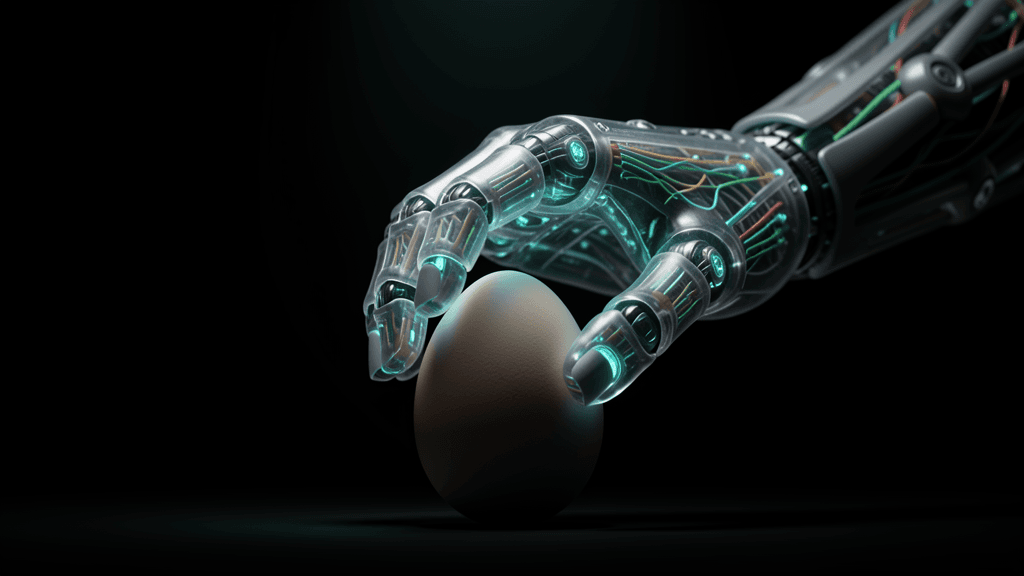
Three layers, 99 percent. A prosthesis that feels like a human hand
An egg that cannot be picked up
When Michael first put on his myoelectric prosthesis, he thought the biggest challenge would be learning the muscle signals. He was wrong. The biggest challenge turned out to be something he didn't expect - the egg. Or more precisely: no feedback. The prosthesis didn't tell him how hard he was squeezing his fingers. The eggs were cracking. The glasses were slipping out of the holder. The plastic bottle crumpled before he could react. The muscles of the forearm sent commands, but the hand, unlike the real hand, did not respond.
This is not an uncommon story. There are approximately three million upper limb amputees in the world. In Poland alone - over 40,000. The vast majority use cosmetic prosthetics, i.e. those that look like a hand but do not move at all. Myoelectric prostheses - controlled by muscle signals - have been available for decades, but their fundamental flaw remains: they do not feel. A hand without feeling is like an eye without vision. It has shape, it has function, but it's missing what makes it truly useful.
The Neuroengineering and Biomedical Instrumentation Laboratory at Johns Hopkins University decided to solve this problem from scratch. In March 2025, Sriramana Sankara's team published inScience Advanceswork that can change the rules of the game. They have created a prosthesis that not only moves - it feels. And he does it with an accuracy that seemed impossible just a year earlier.
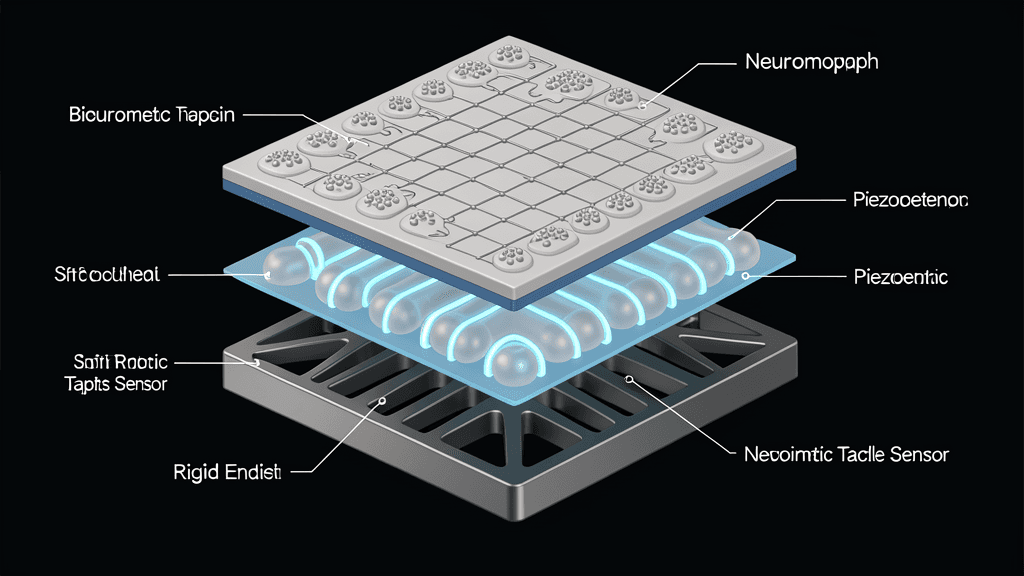
Rys. 1. Trzy warstwy sensora biomimetycznego: piezorezystywna (nacisk statyczny), piezoelektryczna (wibracje) i neuromorficzna (impulsy neuronowe). Każda warstwa odpowiada innemu typowi receptora w ludzkiej skórze. Źródło: Sankar S. et al., Science Advances (2025), DOI: 10.1126/sciadv.adr9300.
99.69 percent - a number that changes everything
To understand why the 99.69% result is groundbreaking, you need to take a step back. The human hand is a marvel of biomechanics - 27 bones, 34 muscles, over 17,000 touch receptors distributed in the skin. Each square centimeter of your fingertip contains about 140 mechanoreceptors — microscopic structures that convert pressure, vibration, texture and temperature into electrical signals. The brain receives these signals 200 times a second and based on them makes decisions: stronger, weaker, release, hold.
The Sankara prosthesis reproduces this architecture in three independent sensory layers, inspired by the physiology of human skin. The first layer - piezoresistive - records the static pressure, i.e. the force with which the prosthesis holds the object. The second one - piezoelectric - captures vibrations and dynamic changes that are crucial when moving the finger across the surface. The third one - neuromorphic - processes raw signals like biological neurons: instead of sending a stream of raw data to a computer, it generates impulses only when the change is significant. It's the same principle used by the nervous system: you don't transmit every pixel of the image - you only send information about edges, contrasts, and movement.
Effect? The prosthesis correctly classified 99.69% of dozens of everyday objects - from glasses to fruit to plastic bottles - based solely on touch. In the texture discrimination test, it achieved 98.38% accuracy, outperforming both pure soft robotic fingers and rigid commercial prosthetics.
This is the scale contrast we started with.Three layers of sensors spread over a surface smaller than a human hand - totaling no more than a few square centimeters of material - perform sensory computations that in a biological hand require 17,000 receptors and decades of evolution.A single micrometer-diameter piezoelectric receptor can distinguish glass from plastic and aluminum from wood - something that is trivial for a healthy hand but was out of reach for any previous prosthesis.
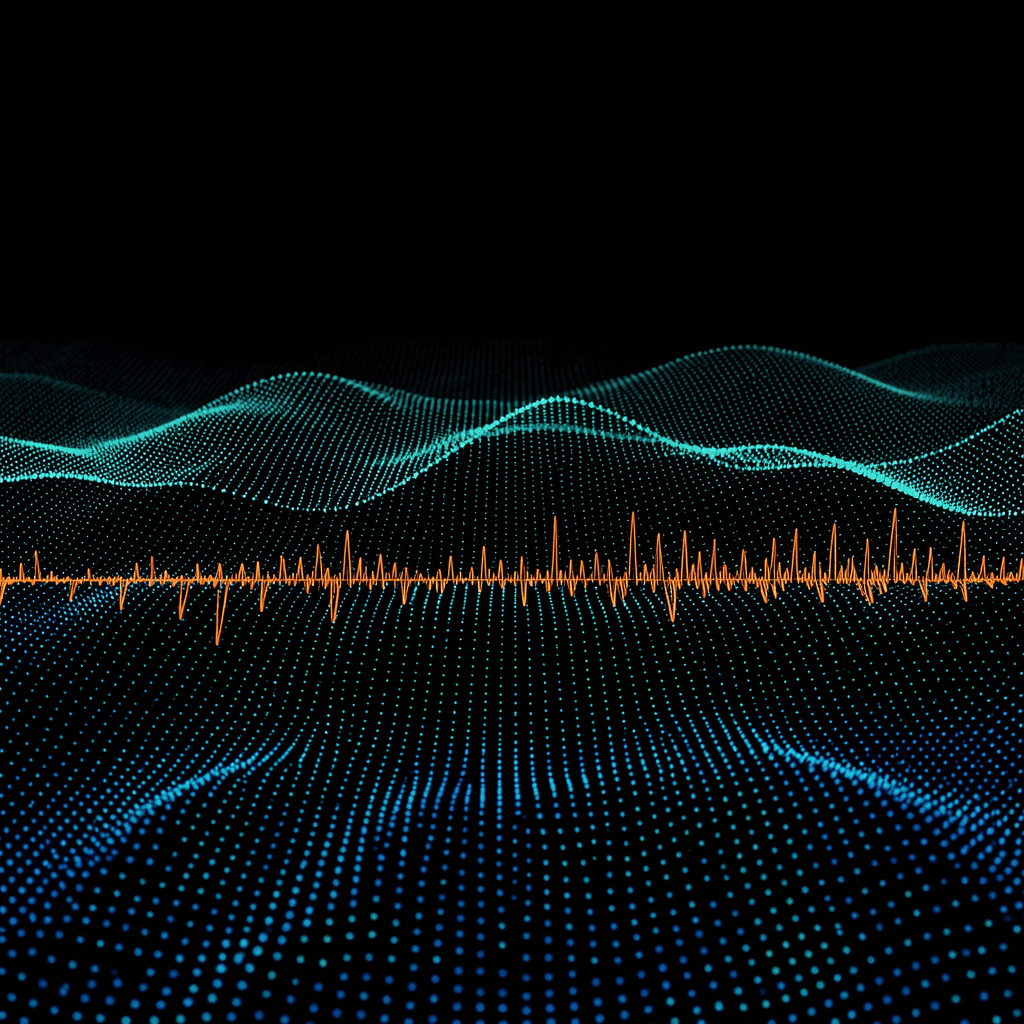
Rys. 2. Wizualizacja danych z trzech warstw sensora dotyku: nacisk statyczny (dół), wibracje dynamiczne (środek), impulsy neuromorficzne (góra). Proteza osiągnęła 99,69% dokładności klasyfikacji obiektów wyłącznie na podstawie tych sygnałów. Źródło: Sankar S. et al., Science Advances (2025), DOI: 10.1126/sciadv.adr9300.
$1.5 billion and a sensory barrier
The global prosthetic limb market was worth approximately $1.5 billion in 2024. Projections are for this to grow to 2.3 billion by 2030, driven by an aging population, increasing numbers of diabetes-related amputations and, crucially, advances in human-machine interfaces. The segment of upper limb prosthetics accounts for approximately 25% of this market, but it is this that attracts the most innovation: unlike leg prostheses, where the mechanics of gait are key, a prosthetic hand must solve the problem of gripping, manipulation and - above all - feedback.
The major players — Germany's Ottobock, Iceland's Össur, Britain's Open Bionics — have been offering myoelectric prostheses for a decade. Their products cost between $25,000 and $75,000 and can perform a dozen or so basic tricks. However, none of them offer sensory feedback at a level comparable to the human hand. The Sankara prosthesis - at least in laboratory conditions - exceeds this threshold.
The difference is not cosmetic. Research over the past five years has consistently shown that up to 40% of upper limb myoelectric prosthesis users abandon them within the first year. The main reason? Just a lack of feeling. A prosthesis without feedback requires constant visual control - the user must look at the hand to know what he or she is doing. It's cognitively exhausting and completely impractical in situations where your eyes are occupied with something else - such as cooking, driving, or working at a computer.
Wrocław University of Science and Technology, National Health Fund and PLN 200,000
Poland has its role in this history - and it is not the role of a passive observer.
Gustaw Rzyman's team from the Gdańsk University of Technology has been working on bionic orthoses for the upper limbs for years, publishing reviews of technologies and development directions. In 2026, Dariusz Mikołajewski from UKW in Bydgoszcz published work on the personalization of hand exoskeletons using artificial intelligence and 3D printing - an approach that could radically reduce the cost of prosthetic production. There are medical robotics laboratories at the Warsaw University of Technology and AGH, and Polish companies - although niche - are beginning to appear in the supply chain of components for European manufacturers of prostheses.
The problem is not a lack of competence. It's in the refund.
An advanced myoelectric prosthesis costs from PLN 80,000 to PLN 200,000 in Poland. The National Health Fund reimburses upper limb prostheses up to - please note - approximately PLN 8,000, depending on the level of amputation. The difference between the reimbursement and the market price is covered by the patient. For most of the 40,000 Polish amputees, this is an insurmountable barrier. Cosmetic prosthetics — the ones that look like a hand but do nothing — are fully reimbursed. A prosthesis that grips but does not feel - partially. A prosthesis that grips and feels - at all.
Meanwhile, data from Johns Hopkins shows that the technology already exists. This isn't a laboratory prototype in the distant future - it's a working device with 99% results published in a peer-reviewed journal. The path from the laboratory to National Health Fund reimbursement is not an engineering problem. This is a systemic problem - regulators, manufacturers, hospitals and the Ministry of Health who need to sit at the same table.
Sources
- Sankar S. et al.,A natural biomimetic prosthetic hand with neuromorphic tactile sensing for precise and compliant grasping, Science Advances (2025). DOI:10.1126/sciadv.adr9300
- Rzyman G. et al.,Upper Limb Bionic Orthoses: General Overview and Forecasting Changes, Applied Sciences (2020). DOI: 10.3390/app10248899
- Mikołajewski D. et al.,AI-Based Personalization of 3D-Printed Hand Exoskeletons, Applied Sciences (2026)
- Grand View Research,Prosthetics and Orthotics Market Size Report, 2024–2030
- National Health Fund,Order on the conditions for concluding and implementing contracts for the supply of medical devices(2025)
The full text of the work is not publicly available - the Science.org server uses anti-bot protection. Analysis based on abstract, data from OpenAlex and Semantic Scholar, and complementary market sources.
Comments· 0
No comments yet. Be the first.