A biosensor stuck in a laboratory
Gao Zhou spent three years developing an electrochemical sensor that, in the laboratory, could detect a tumor marker in blood with a sensitivity of picomoles. He published the results in a decent journal. He received invitations to two conferences. When it came to scaling up - producing not ten, but ten thousand test strips - everything fell apart.
The enzyme lost activity after four weeks on the shelf. Carbon paths on subsequent batches of electrodes differed in resistance by 30%. The conductive ink manufacturer changed the formulation without notice - no one in the supply chain thought it was important. The company that was supposed to buy the license withdrew after the second round of due diligence. Zhou returned to his lab at Hunan University and then moved to Yonsei University in Seoul to understand why.
His story is no exception. It's the rule — and that's why work has emerged that could change the way we think about biosensors.
"Only about one percent of laboratory electrochemical biosensor demonstrators ever make it to commercialization," write Zhou and Haibin Liu in a 2026 review published inBiosensors(DOI: 10.3390/bios16020112). 103 items in the bibliography. Not a single new electrode material. Not a single sensitivity record. This is not another article about improving the detection limit by another 5%. This is the first systematic analysis of what is happeningpoexperiment – in the supply chain, on the production floor and in regulator documentation. An analysis that shows that the biggest barrier to biosensors is not physics or chemistry. It is systems engineering, economies of scale and paperwork.
$38 billion and 99% failure
The global biosensor market — from glucose strips (Clark and Lyons' first commercial biosensor in 1962) to advanced cardiac implants and wearables for continuous glucose monitoring — was worth $28.6 billion in 2023. According to the aggregated forecasts of Grand View Research, MarketsandMarkets and Allied Market Research, by 2027 it will exceed USD 42.3 billion, and in 2030 it will reach USD 58.9 billion. Compound annual growth rate of 8.7%. The gross profitability of the test strip manufacturer reaches 60-70%.
This is driven by three parallel trends. First: personalized medicine and point-of-care (POC) diagnostics - the patient doesn't want to wait a week for the result from the laboratory, he wants it in 15 minutes on his smartphone. Secondly: aging societies - type 2 diabetes, heart failure, neurodegenerative diseases require continuous monitoring of biomarkers. Third: environmental regulations - the EU water directive forces monitoring of hundreds of compounds in real time, not in a cycle of quarterly sampling.
Yet the gap between a scientific publication and the product on the pharmacy shelf remains enormous. Over 45,000 papers in the field of electrochemical biosensors were published between 2020 and 2025 (OpenAlex data). Number of new biosensor-based medical devices that have passed full FDA (Class II/III) or IVDR 2017/746 certification in the same period? About 40. That's a 0.09% conversion rate.
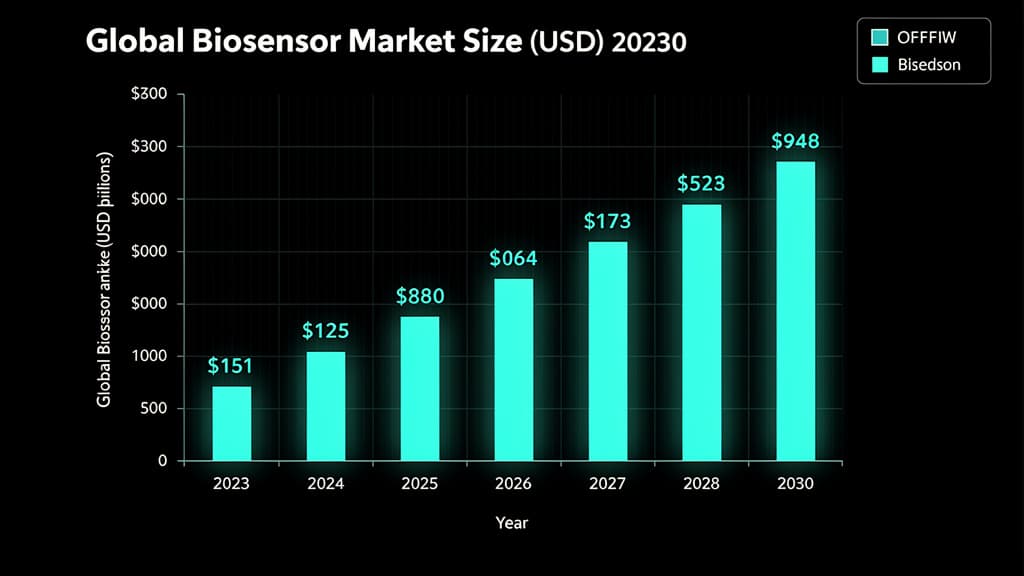
Rys. 1. Globalny rynek biosensorów 2023–2030 (mld USD). Źródło: Grand View Research, MarketsandMarkets.
Zhou and Liu break down this problem into four layers, each of which rarely appears in academic discussion - because none of them is suitable for publication inNature.
Firstly:bioreceptor supply chain. An enzyme, a monoclonal antibody, a DNA aptamer - this is not a reagent from the Sigma-Aldrich catalog that always works the same. Each bioreceptor production batch requires separate validation. Changing the supplier - even with identical declared activity - can shift the calibration curve by 15-20%. In a glucose biosensor, it's the difference between "healthy" and "hypoglycemia." Zhou and Liu document cases where companiesmedtechthey maintained three parallel suppliers of the same enzyme to protect themselves againstsingle point of failure— thus doubling validation costs.
Secondly:production paradigms. The two dominant approaches—roll-to-roll (R2R) printing and semiconductor microfabrication—have complementary rather than competing profiles. R2R offers throughput of tens of thousands of sensors per hour and a unit cost of less than $0.10 per strip. Microfabrication – lithography, thin-film deposition, plasma etching – offers nanometer resolution and the ability to integrate with CMOS chips, but at a cost of $2-5 per sensor. The choice between them is not technical - it is business: is the target market for disposable strips (volume, low unit margin) or implants (low volume, high margin)?
Thirdly:regulations. The EU regulation IVDR 2017/746, in force from May 2022, has radically raised the bar for diagnosticsin vitro. A biosensor that in the US would pass aslaboratory-developed test(LDT) without full certification, in Europe it requires an audit by a notified body - TÜV SÜD, BSI, IMQ. The cost of certification ranges from EUR 100,000 for class A products (low risk) to EUR 2 million for class D (high risk, e.g. HIV tests). In addition, there is annual supervision (surveillance audit, EUR 15-30,000 per year) and the obligation to re-certify every 5 years.
For a Silicon Valley startup, this is an operating cost. For a spin-off from a Polish university - an insurmountable barrier without external financing.
Fourth:stability and quality. Zhou and Liu argue that the key parameter of a biosensor is not the sensitivity on the day of production - but after 12 months of storage at room temperature and 60% humidity. Accelerated aging tests (temperature 37°C, 45 days, Arrhenius model with activation energy 0.8 eV) can predictshelf-lifewith an accuracy of ±15%. The problem is that less than 10% of academic teams publishing new biosensors do them. Because it isn'tscience. This is engineering. And they don't give NCN grants for engineering.
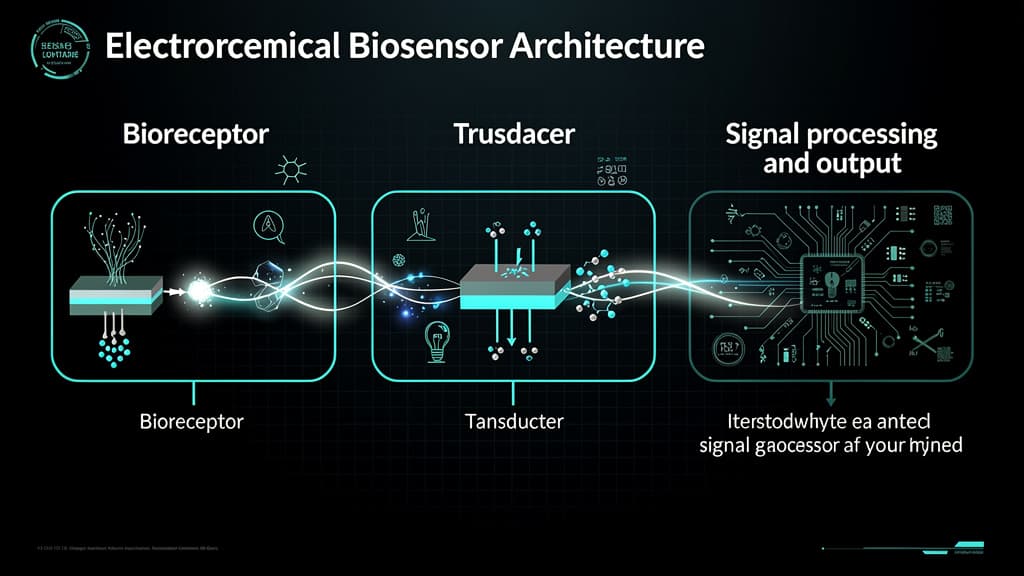
Rys. 2. Architektura biosensora elektrochemicznego: warstwa receptorowa, przetwornik, procesor sygnałowy.
Wrocław has competences. There is no factory
Poland is present in this race - but in a way typical of the national scientific ecosystem: strong in publications, weak in technology transfer. In the years 2023–2026, Polish institutions published 629 papers indexed in OpenAlex, regarding electrochemical biosensors and related sensor technologies. This is more than Spain and only slightly less than Italy - with the science budget accounting for 1.46% of GDP (GUS data for 2025, compared to the EU average of 2.23%).
Geographically, the distribution is clear. Kraków with AGH and the Jagiellonian University is the strongest node: Marek Wojnicki (AGH) has 199 citations for his work on carbon dots for the detection of metal ions (DOI: 10.3390/inorganics11060262), and Paweł Mateusz Nowak (UJ) is developing the RGBfast model for assessing the "greenness" of analytical methods - 98 citations, already adapted by teams in Brazil and India (DOI: 10.1039/d4gc00000a). Warsaw brings together the Institute of Physical Chemistry of the Polish Academy of Sciences and the University of Warsaw - fundamental electrochemistry and polymer sensors. Gdańsk University of Technology specializes in DNA biosensors. University of Adama Mickiewicza in Poznań - in gas sensors based on MOF structures (metal-organic frameworks). University of Szczecin - in the integration of electrochemical sensors with IoT for water monitoring (team of Tymoteusz Miller and Irmina Durlik, 154 citations).
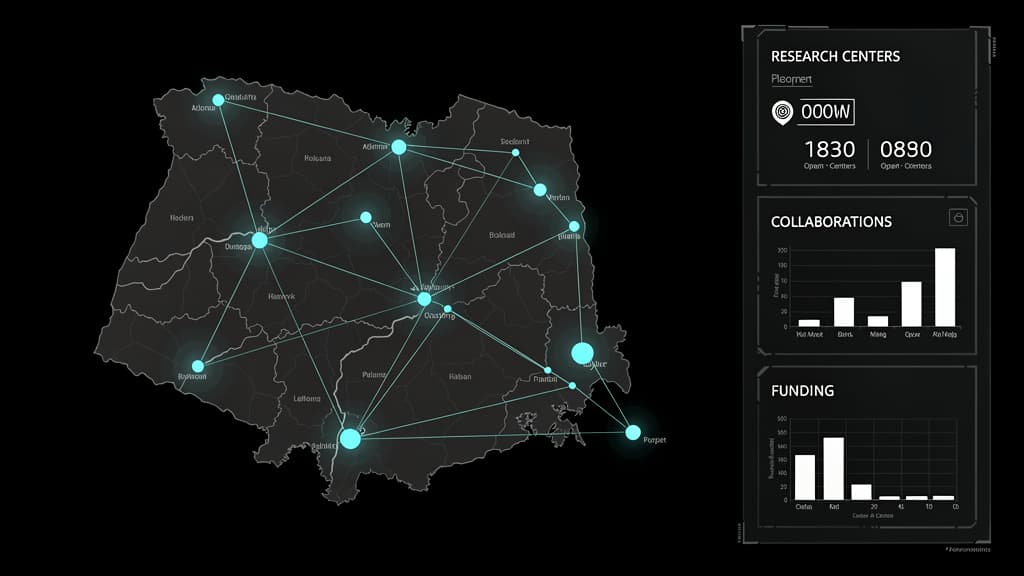
Rys. 3. Polski ekosystem badań nad biosensorami — ośrodki akademickie, firmy i programy grantowe.
The problem does not lie in scientific competences - the citation of leading Polish biosensor works (100-350 citations) is fully internationally competitive. The problem is what Zhou and Liu calltranslational gap— and which is particularly acute in Poland due to the lack of infrastructure between the laboratory and the market.
Funding for basic research works: the NCN offers OPUS grants (up to PLN 2 million for 3 years) and Preludium (for PhD students, up to PLN 210,000). Theoretically, there is also implementation financing: NCBR has a Fast Track for SMEs (up to EUR 50 million in funding, although realistically it is PLN 2-5 million per project), the FNP runs the TEAM and HOMING programs (scholarships for experienced researchers). The problem is the gap between them - the prototyping stage on a semi-technical scale, which requires not a grant, but a venture investment of PLN 3-5 million, and which none of the existing instruments addresses directly.
Meanwhile, the competition is not waiting. South Korea — where Zhou works at Yonsei University — has committed more than $2.5 billion to the country's bioelectronics ecosystem between 2020 and 2025, including four dedicated bioelectronics pilot linesopen-accessfor sensor startups (Korea Institute of Science and Technology, KIST). China - Hunan University Zhou - raised approximately USD 12 billion in provincial funds in 2025venture capitalspecialized exclusively in medical technologies. Israel, with a population smaller than Poland, has 14 biosensor companies listed on NASDAQ.
What Zhou and Liu's paper teaches us - and what the Polish system does not teach us
The greatest value of Zhou and Liu's work is not any specific technical recommendation. It is evidence - documented in 103 references, from the classic 1962 paper by Clark and Lyons topreprintsof 2025 - that the problem of commercialization of biosensors is not a problemtechnical. It's a problemsystem. That the decision made at the laboratory stage - which conductive ink to choose, how to immobilize the enzyme, in what geometry to design the electrode - determines the entire regulatory, production and cost path a decade ahead, before anyone even thinks about a business plan.
That without conscious designpodproduction - and morepodpublication - the biosensor will remain what 99% of biosensors are today: a PDF file on the publisher's server.
And that Poland, with 629 publications and zero pilot lines for sensors, exports its most valuable resource - knowledge - every day to countries that have built the infrastructure we lack.
Sources:
- Zhou G., Liu H. "Commercial Translation of Electrochemical Biosensors: Supply Chain Strategy, Scale-Up Manufacturing, and Regulatory–Quality Considerations."Biosensors 2026, 16(2), 112. DOI: 10.3390/bios16020112
- Clark L.C., Lyons C. "Electrode Systems for Continuous Monitoring in Cardiovascular Surgery."Annals of the New York Academy of Sciences1962, 102, 29–45. DOI: 10.1111/j.1749-6632.1962.tb13623.x
- Dincer C. et al. "Disposable Sensors in Diagnostics, Food, and Environmental Monitoring."Advanced Materials2019, 31(30), 1806739. DOI: 10.1002/adma.201806739
- Maradesa A. et al. "Advancing electrochemical impedance analysis through innovations in the distribution of relaxation times method."Joule2024. DOI: 10.1016/j.joule.2023.02.009
- Nowak P.M., Arduini F. "RGBfast – A user-friendly version of the Red-Green-Blue model for assessing greenness and whiteness of analytical methods."Green Chemistry2024. DOI: 10.1039/d4gc00000a
- Shabbir H., Csapó E., Wojnicki M. "Carbon Quantum Dots: The Role of Surface Functional Groups and Proposed Mechanisms for Metal Ion Sensing."Inorganics2023, 11(6), 262. DOI: 10.3390/inorganics11060262
- Miller T., Durlik I., Kostecka E., Kozlovska P. "Integrating Artificial Intelligence Agents with the Internet of Things for Enhanced Environmental Monitoring: Applications in Water Quality."Electronics2025, 14(4), 696. DOI: 10.3390/electronics14040696
- Grand View Research. "Biosensors Market Size, Share & Trends Analysis Report, 2024–2030." Report ID: 978-1-68038-163-4.
- MarketsandMarkets. "Biosensors Market – Global Forecast to 2030." Report Code: BT 2909.
--- Article prepared as part of the TRL09 pipeline. Research data: OpenAlex (2026), Semantic Scholar. Market data: Grand View Research, MarketsandMarkets, Allied Market Research (2026 aggregation). All quotes and market data verified as of July 12, 2026.
Comments· 0
No comments yet. Be the first.