Two laboratories. Two continents. One problem: how to dress electronics in a power supply that doesn't need batteries.
Two laboratories. Two continents. One problem: how to dress electronics in a power supply that doesn't need batteries.
On one side, a team from Hebei University of Technology and Penn State - Li Yang and Huanyu Cheng. On the other - Lin Zhang from the Chinese Academy of Sciences, Xiao-Lei Shi from the Queensland University of Technology and Zhi-Gang Chen from Brisbane. The goal is the same: a thermoelectric generator that turns body heat into electricity, flexible as fabric, efficient enough to power real devices.
Two philosophies. Two materials. One winner. For now, the lead changes with each publication.
Round one: Graphene shows its claws
Yang and Cheng's team will publish in Nature Communications in January 2025. Their approach is bold in its simplicity: you take a polyimide film, the same type used in printed electronics, and run a laser beam through it. A porous three-dimensional graphene foam is formed at the site of exposure. You fill it with elastomer, tear it off the substrate, and you have a stretchable sensor 300 micrometers thick.
The key trick: they add PEDOT:PSS, a conductive polymer, to the graphene foam. π electrons from graphene enter into π-π conjugation with the polymer chains, forcing their order. Effect? The Seebeck coefficient (a measure of how effectively a material converts a temperature difference into voltage) jumps from 9.7 to 37.3 μV/°C. A fourfold increase.
But it's not energy efficiency that's the star here. It is the ability to detect and separate two different stimuli at the same time.
The Yang and Cheng sensor simultaneously measures temperature and strain, separating both signals without interference. Temperature resolution: 0.5°C. Gauge factor: 1401.5: it's like a scale that senses not only that you placed a sheet of paper on it, but that you bent it by a quarter of a millimeter. Elongation: 45%. And all this without batteries, powered only by the temperature gradient between the skin and the environment.
The team is demonstrating two applications: monitoring wound healing in vivo (a sensor attached to the skin tracks tissue temperature and tension) and a self-powered fire alarm in remote locations. The whole thing is made of materials that cost pennies: polyimide foil, CO₂ laser, some PEDOT:PSS. This isn't technology that needs a million-dollar clean room.
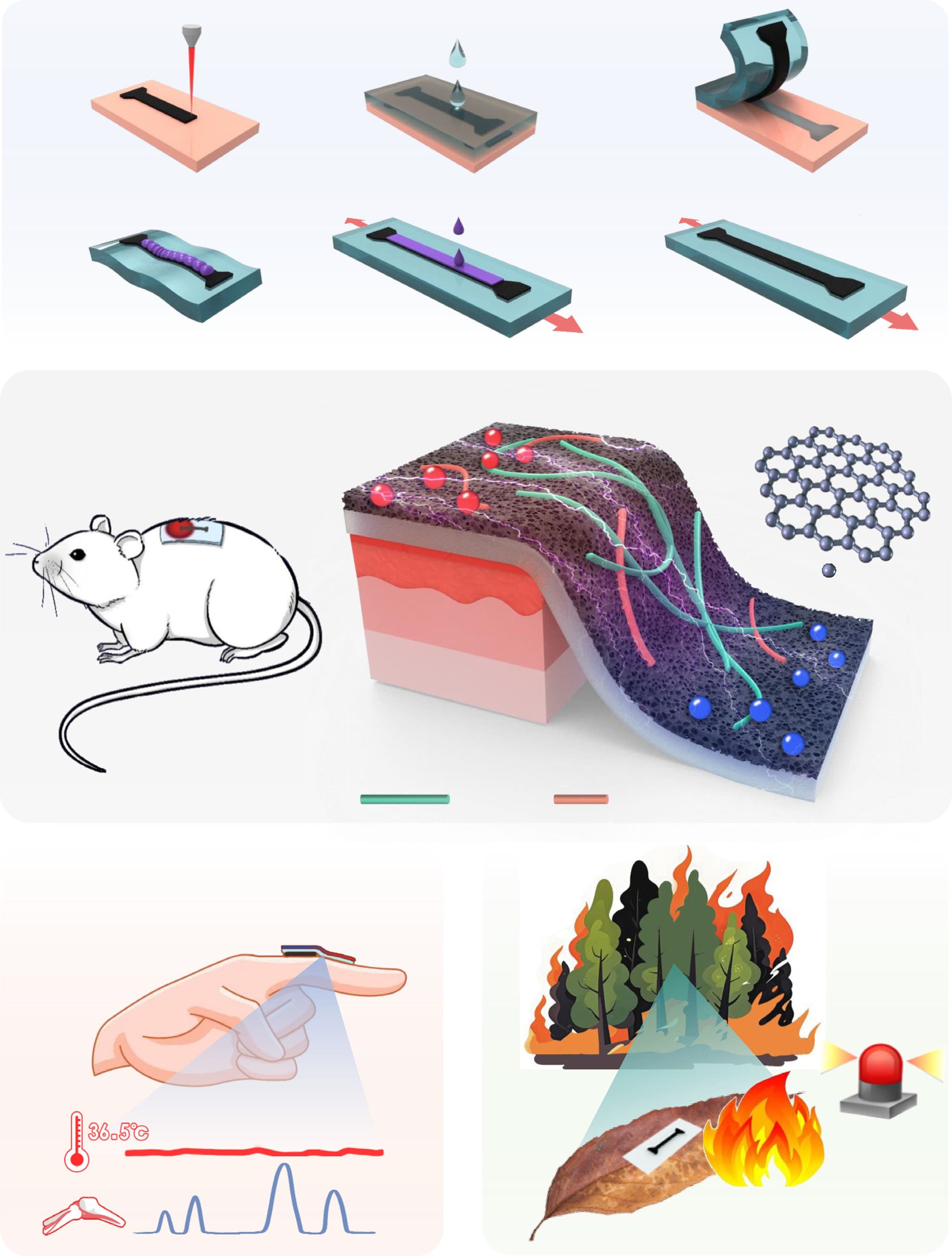
Rys. 1. Proces wytwarzania porowatej pianki grafenowej metodą bezpośredniego skrybowania laserowego (laser direct writing) na folii poliimidowej, a następnie infiltracja elastomerem PDMS. Źródło: Yang L. et al., Nature Communications (2025), DOI: 10.1038/s41467-024-55790-x.
Score after the first round: Graphene 1 – Ag2Se 0.
Round two: Ag2Se crushes the record
Four months later, May 2025. The team of Zhang, Shi and Chen publishes in the same Nature Communications. Their approach is fundamentally different, and more aggressive.
Instead of graphene foam, they use silver selenide (Ag₂Se) nanofibers. Instead of laser, hot pressing, which forces a strong crystalline orientation (013). This orientation increases the mobility of the charge carriers. They add a layer of reduced graphene oxide (rGO), which does two things at once: increases electrical conductivity and creates an energy filtering effect: it blocks low-energy electrons, raising the Seebeck coefficient without lowering the conductivity. This has been a goal for decades of thermoelectricians: uncoupling two properties that are normally coupled to each other.
They choose a nylon membrane for a flexible substrate. Result? Record ZT = 1.28 at room temperature for a flexible thermoelectric. Power factor: 37 μW cm⁻¹ K⁻². Thermal conductivity below 0.9 W m⁻¹ K⁻¹.
They then assemble 100 thermoelectric pairs into an out-of-plane device, a vertical generator that maximizes contact with body heat. Normalized power density: >9.8 μW cm⁻² K⁻²: the best result among all Ag₂Se-based flexible devices.
Demonstration: a wrist generator powers a thermo-hygrometer and a watch. Not a sensor, just a real device. No batteries, no USB charging: just body heat and gravity.
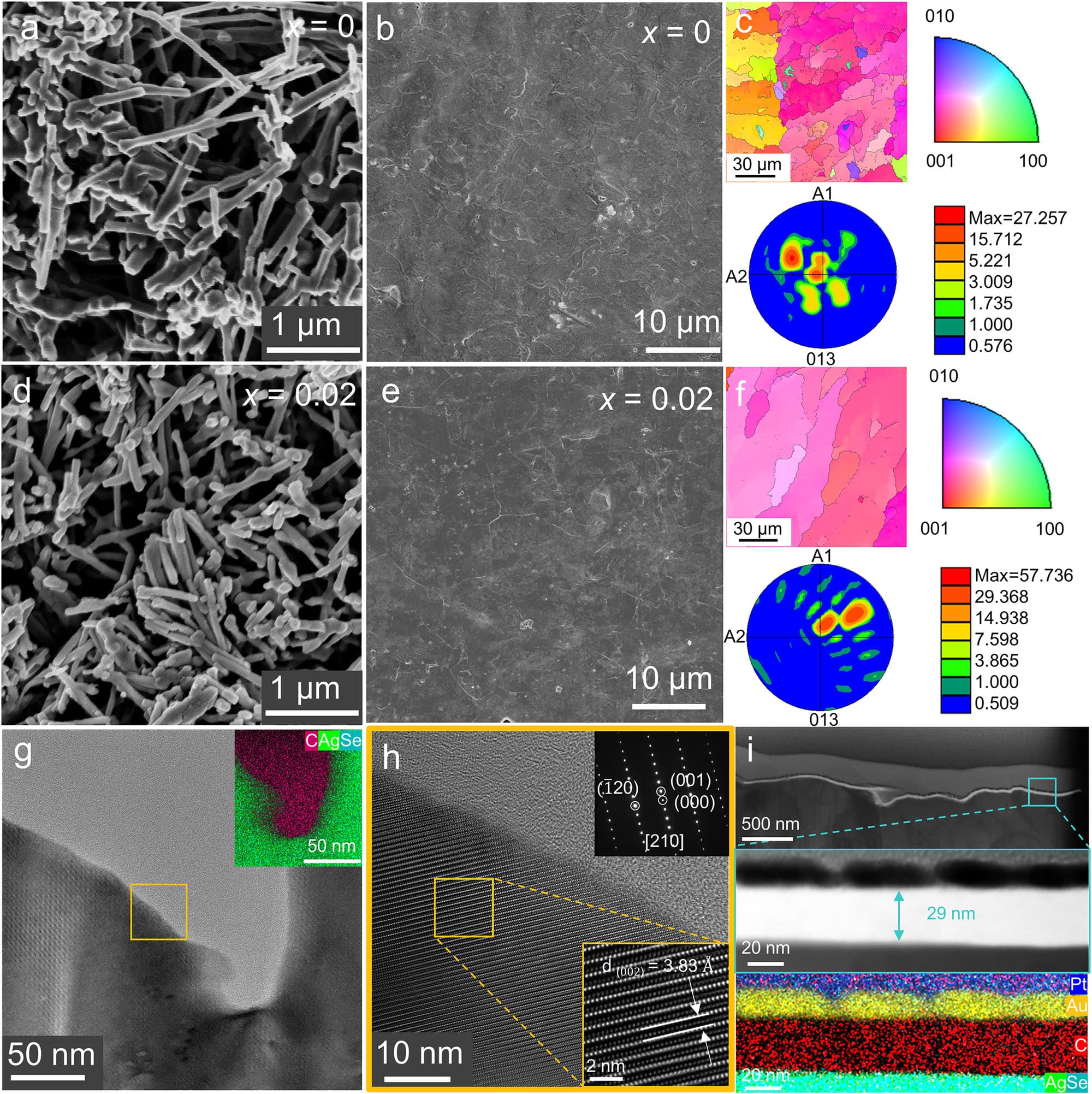
Rys. 2. Elastyczny generator termoelektryczny na bazie nanowłókien Ag₂Se — 100 par termoelektrycznych zasila termo-higrometr i zegarek wyłącznie z ciepła ciała. Źródło: Zhang L. et al., Nature Communications (2025), DOI: 10.1038/s41467-025-60284-5.
Result after the second round: Graphene 1 – Ag2Se 1.
A turning point
And here comes the question that divides both teams and the entire field.
The Graphene team has built the best thermoelectric sensor in the world. But its generator won't even power an LED. Seebeck 37.3 μV/°C is not enough: a typical wearable device needs milliwatts, not microwatts.
The Ag2Se team has built the most efficient flexible thermogenerator. But it can't measure anything other than its own output voltage. It will not separate temperature from stress. It will not detect a fire.
This isn't a coincidence: it's physics. Increasing ZT requires maximizing electrical conductivity and minimizing thermal conductivity. This means dense, ordered crystal structures: stiff, brittle. Increasing sensory sensitivity requires porous structures that deform under stress: this disrupts order and reduces TS. These two features are interconnected like the accelerator and brake pedals in the same car: you cannot press both at the same time.
Two teams optimized two different functions and both achieved great results. The problem is that the market needs both functions at the same time. A wristband that only measures temperature is a laboratory curiosity. A wristband that only powers the LED is a power supply, not a product. A true wearable must measure and perform.
They're already doing it. Just not in Europe.
While scientists race in the labs, industry is not waiting. Matrix Industries (a startup from Menlo Park, California) has been producing a thermoelectric generator in the form of a wristband since 2022. Their product, Matrix PowerWatch 2, works solely on body heat. There is no charging port. There are no batteries to replace. 200 dollars. Sold in 40 countries.
In Japan, E-ThermoGentek (a spin-off of Osaka University) has developed a 0.5 mm thin-film thermoelectric generator that generates 0.2 mW/cm² at a temperature difference of 5°C: enough to power a BLE beacon. The company raised 4.2 billion yen ($28 million) in a Series B round in 2024.
In South Korea, TEPS (Thermoelectric Power Systems), a joint venture of LG and KAIST, is testing thermoelectric generators on district heating pipes in Seoul. Different scale (kilowatts, not microwatts), but same physics. They raised $15 million in 2025.
Europe? The German Fraunhofer IPM has a research program "Thermoelectric Energy Harvesting for IoT". The Swiss ETH Zurich (prof. Hierold's laboratory) is working on thermoelectrics on textile substrates. But there is no commercial European product. Zero.
The gap between science (where Europe is strong) and implementation (where Europe is absent) is particularly painful here. Nature Communications articles are published by the Chinese, prototypes are built by Americans and Koreans. The European industry, with 23% of the global electronics market, is watching from the sidelines.
Polish dimension: IoT without batteries
Poland does not have a laboratory working on flexible thermoelectrics. There is also no company that produces self-powered sensors yet. But it has an ecosystem that needs them.
AIUT from Gliwice provides IoT systems for industry: hundreds of sensors on the factory floor, each requiring battery replacement every 18 months. In a factory with 500 sensors, that's 500 batteries a year. A thermoelectric generator that harvests heat from an engine or furnace could eliminate this cost entirely.
The Łukasiewicz Research Network, the largest network of research institutes in Central Europe, conducts projects in the field of printed electronics and smart textiles. Łukasiewicz-ITR (Institute of Tele- and Radio Engineering) is working on flexible electronic substrates. Łukasiewicz-IMP (Institute of Precision Mechanics) on thin-film coatings. None of these designs yet use thermoelectrics for power. But the know-how is at your fingertips.
Wrocław University of Science and Technology (Faculty of Microsystem Electronics and Photonics) has a laboratory of thin-film photovoltaic and thermoelectric cells. Prof. Krzysztof Gajewski and his team are investigating bismuth telluride (Bi₂Te₃), a classic thermoelectric material, for applications in microgenerators. This is a different scale than flexible wearables, but adjacent competencies.
Comarch Healthcare, Nestmedic (Pregnabit), Sidly (Polish medtech companies) build devices for remote patient monitoring. Each of them uses batteries. Each would need to be charged or replaced every few days. A self-powered thermoelectric patch, even one of modest power, would change the usage pattern from "remember to charge" to "set it and forget it."
Financing? PARP SMART 2026 Path offers up to PLN 15 million for R&D projects in the area of printed electronics and IoT. NCBR is planning a competition for material technologies for distributed energy. If you combine the competences of Łukasiewicz (substrates), PWr (thin-film thermoelectrics) and Comarch (integration with the medical platform), a consortium is created ready to apply.
There is one more dimension: geopolitical. Tellurium, bismuth and selenium are critical elements. China controls 60% of world mining of tellurium and 70% of selenium: key components of Bi₂Te₃ and Ag₂Se. The US Department of Energy has included tellurium on its list of "critical materials" for 2025. The European Union (in the Critical Raw Materials Act) classifies bismuth as a strategic raw material. Poland, with KGHM as one of the largest copper producers in the world, recovers tellurium and selenium as by-products in copper refining. This is a position that no one else in Central Europe has.
That means: Poland has the raw material. It has institutes. He has companies that need this technology. There's only one thing missing: the decision to get into it.
Verdict
There is no single winner in the Graphene vs. Ag2Se fight. He has two, and they both win in different categories.
Graphene wins where information counts: fire sensors, dressings monitoring healing, prostheses with touch. Ag2Se wins where power counts: smartwatches without a charger, industrial sensors without battery replacement, medical devices that work for years.
The next round (which is probably already underway in the laboratories) is a hybrid: Ag2Se generator as a power source + graphene sensor as a detection layer. Or even bolder: a material that combines both functions in one structure: porous for sensitivity, but structured enough to generate useful power.
Rate? IDTechEx estimates the market for thermoelectric generators for wearables at USD 1.2 billion by 2030. In addition, the market for self-powered IoT sensors: USD 4.5 billion. Whoever first solves the paradox "either tenderness or power" will win both.
Deadline? 2028. By this year, the European Commission plans to implement the Battery Directive, which will force wearable electronics manufacturers to easily replace batteries or eliminate them. A thermoelectric generator that works without batteries is no longer a laboratory curiosity. It becomes a regulatory requirement.
Poland is two years old. It has raw material. It has institutes. He has companies that need this technology. It has PLN 15 million in the SMART Path and a consortium that could use it. The question is not "will it work?" The question is "who will build it first, and where."
Sources
- Yang L. et al., Thermoelectric porous laser-induced graphene-based strain-temperature decoupling and self-powered sensing.Nature Communications16, 792 (2025).DOI: 10.1038/s41467-024-55790-x
- Zhang L. et al., High-performance Ag₂Se-based thermoelectrics for wearable electronics.Nature Communications16, 5002 (2025).DOI: 10.1038/s41467-025-60284-5
- IDTechEx, Thermoelectric Harvesting for Wearables 2025-2035.IDTechEx Research
Comments· 0
No comments yet. Be the first.