Paper mill waste just solved a 40-year-old membrane problem. Why hasn't anyone thought of this before
Waste that no one was looking for
In 2024, Wentian Zhang, a graduate student at Sun Yat-sen University in Guangzhou, tried to do something that membrane engineers had been trying unsuccessfully for four decades: create a nanofiltration membrane that was both fast and selective. Each previous attempt ended with the same result - if the membrane filtered out pollutants well, it did so slowly. If it let the water through quickly, it let through what it was supposed to hold.
Zhang didn't look to new polymers, nanoparticles, or interlayers for the solution - all paths that dozens of labs had blazed before him. He reached for alkaline lignin. Waste from paper production.
What happened next surprised even his promoter. The lignin-infused membrane achieved a water permeability of 26 liters per square meter per hour per bar - 3.6 times higher than a conventional polyamide membrane. At the same time, its selectivity in separating chloride from sulfate ions increased from 33.7 to 191. This was not an evolutionary correction. This was a break in the compromise that had defined the physical limits of the technology for decades.
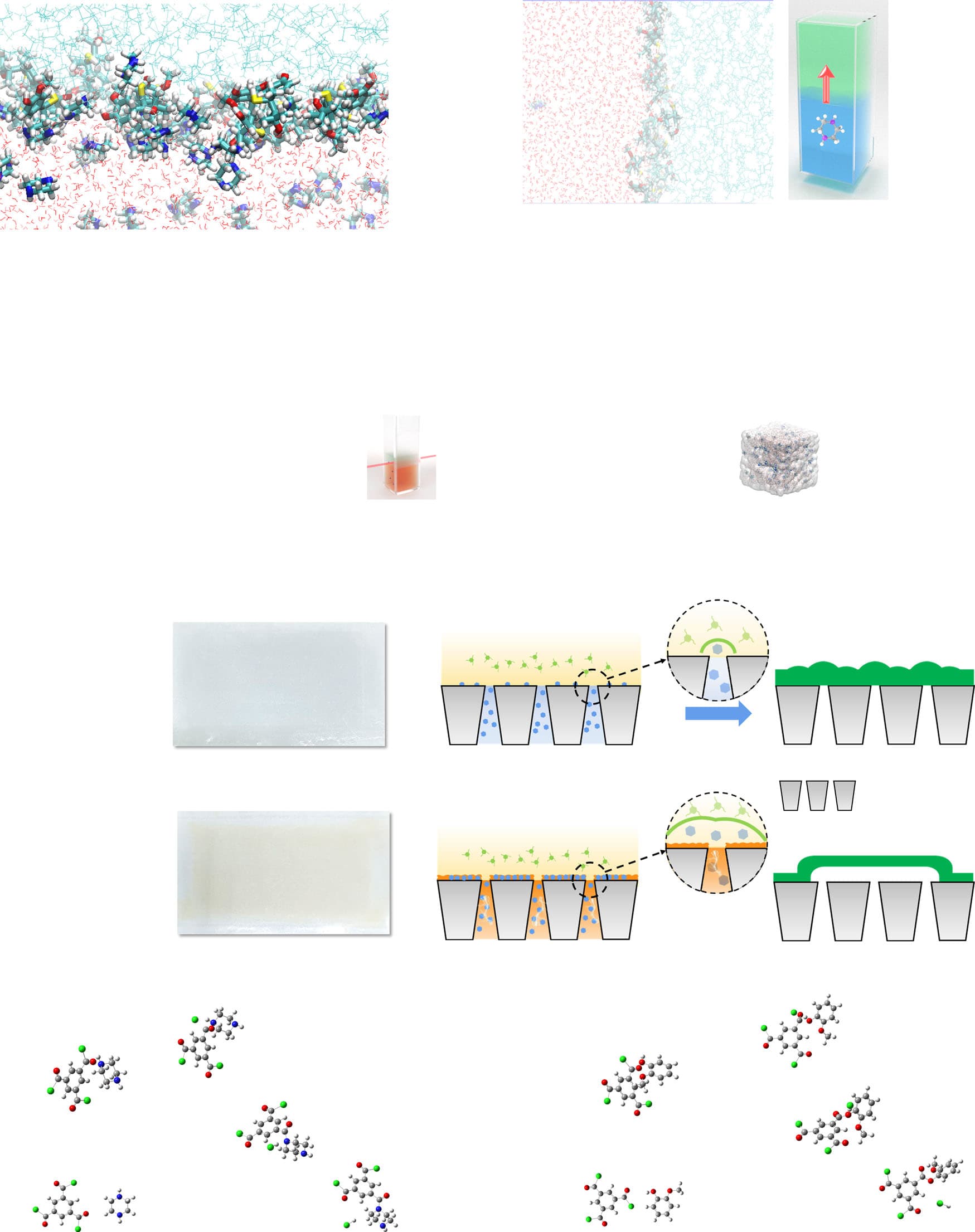
Rys. 1. Porównanie morfologii powierzchni konwencjonalnej membrany poliamidowej (górny rząd) i membrany z dodatkiem ligniny (dolny rząd). Obrazy SEM (a, d) i AFM (b, e) pokazują przejście od gładkiej struktury nanoguzkowej do pomarszczonej struktury zwiększającej efektywną powierzchnię filtracji. Źródło: Zhang W. et al., Lignin alkali regulated interfacial polymerization towards ultra-selective and highly permeable nanofiltration membrane, Nature Communications (2025), DOI: 10.1038/s41467-024-55595-y.
Wall #1: A compromise that refused to break
Since the invention of polyamide membranes via interfacial polymerization (IP) in the 1980s, engineers have been confronted with the same barrier. The nanofiltration membrane is a thin layer of polyamide — several tens of nanometers thick — that separates ions based on their size and charge. To be selective, the layer must be densely cross-linked - more chemical bonds between the polymer chains. But the more bonds there are, the greater the resistance to flowing water.
This was a fundamental problem, not an engineering one. In 2018, a team from Yale showed that even with perfect control of the polymerization process, the membrane cannot simultaneously maximize permeability and selectivity - there is a physical limit, the so-calledupperbound. Any membrane above this curve was theoretically impossible.
Yet Zhang and his team have just crossed it.
Wall #2: Nanoparticles, interlayers and dead ends
Over the past decade, laboratories around the world have tried to get around this compromise in three ways. First: adding nanoparticles — graphene oxide, carbon nanotubes, MXenes — to the polymerization solution. It worked on a laboratory scale. The membrane with nanotubes could be twice as permeable. Problem? The nanoparticles agglomerated—clumped together into larger clumps—with each attempt at larger scale production. A membrane the size of an A4 sheet of paper worked. The meter-long membrane had random defects.
Second way: interlayers. A team from MIT in 2020 showed that if an additional layer - such as cellulose nanofibers - was placed between the substrate and the polyamide layer, monomer diffusion could be controlled and a thinner, more uniform membrane could be obtained. Again: it worked. But each additional layer means an additional production step, an additional carbon footprint and an additional cost. No membrane manufacturer, from Dow FilmTec to Toray, will add an extra step to a production line that runs 24 hours a day.
Third way: free membranes (free-standing). In 2022, a group from KAUST in Saudi Arabia produced a polyamide membrane without a substrate - only the active layer with a thickness of less than 10 nanometers. The transmittance was stunning. But such a membrane was so delicate that it could not be installed in any filtration module without tearing.
Three approaches, three dead ends. And Zhang needed something that would work in the existing production line. No additional steps. No nanoparticles. No risk.
Wall #3: Industrial production is unforgiving
The last barrier was the most practical and also the most difficult. Any innovation in membranes – even if it works in the laboratory – must be compatible with the existing production line. Manufacturers such as DuPont Water Solutions and Toray produce hundreds of kilometers of membranes per year in the processroll-to-roll. Adding a new step – interlayer application, functionalization with nanoparticles – means reconfiguring the entire factory. Cost: tens of millions of dollars.
Therefore, for 40 years the industry was stuck with the same chemistry: piperazine (PIP) in the aqueous phase, trimesoyl chloride (TMC) in the organic phase, polymerization at the interface. Same recipe, same restrictions.
Zhang realized that the only acceptable change was to replace an additive in an existing recipe. No new stages. Simply: instead of a pure PIP solution - a PIP solution with the addition of something that regulates the polymerization process. But what would it be?
A breakthrough: lignin that behaves like a surfactant
Alkaline lignin is waste. When producing paper using the kraft method, approximately 70 million tons of paper are produced annually - mainly burned on site for energy recovery. Its market value is close to zero.
But lignin has an unusual structure. It contains both hydrophobic benzene rings and hydrophilic hydroxyl groups. It behaves like a surfactant - it accumulates at the water-organic solvent interface and lowers the interfacial tension.
When Zhang added lignin to the PIP solution, three things happened at once. First, lignin lowered the energy barrier for PIP diffusion from the aqueous to the organic phase from 7.03 to 5.54 kJ/mol, which accelerated the polymerization reaction. Second, its hydrophilic groups evenly dispersed the PIP molecules on the substrate – no more uneven distribution of monomers. Thirdly, the accelerated reaction at the phase boundary caused interfacial instability - the membrane surface folded, creating a characteristic "wrinkled" structure (crumpled
Effect? The LA-TFC membrane had a polyamide layer 40% thinner than the conventional one, a degree of cross-linking of 85.5% (instead of 67.5%) and an effective surface area three times larger due to wrinkles. Each of these three changes alone would be progress. All three together - that was exceeding the upper bound.
The team tested the membrane in a 100-hour continuous test. It didn't degrade. He produced a 65x25 cm sheet and took samples from eight different locations - all with identical yields. Finally, he replaced the pure alkaline lignin with real black liquor—wastewater from the Qingshan Paper Industry paper factory in Fujian. The membrane still performed: 21.5 L m⁻² h⁻¹ bar⁻¹, Cl⁻/SO₄²⁻ selectivity of 105. That is, better than Dowa's commercial NF270 membrane - on real industrial waste.
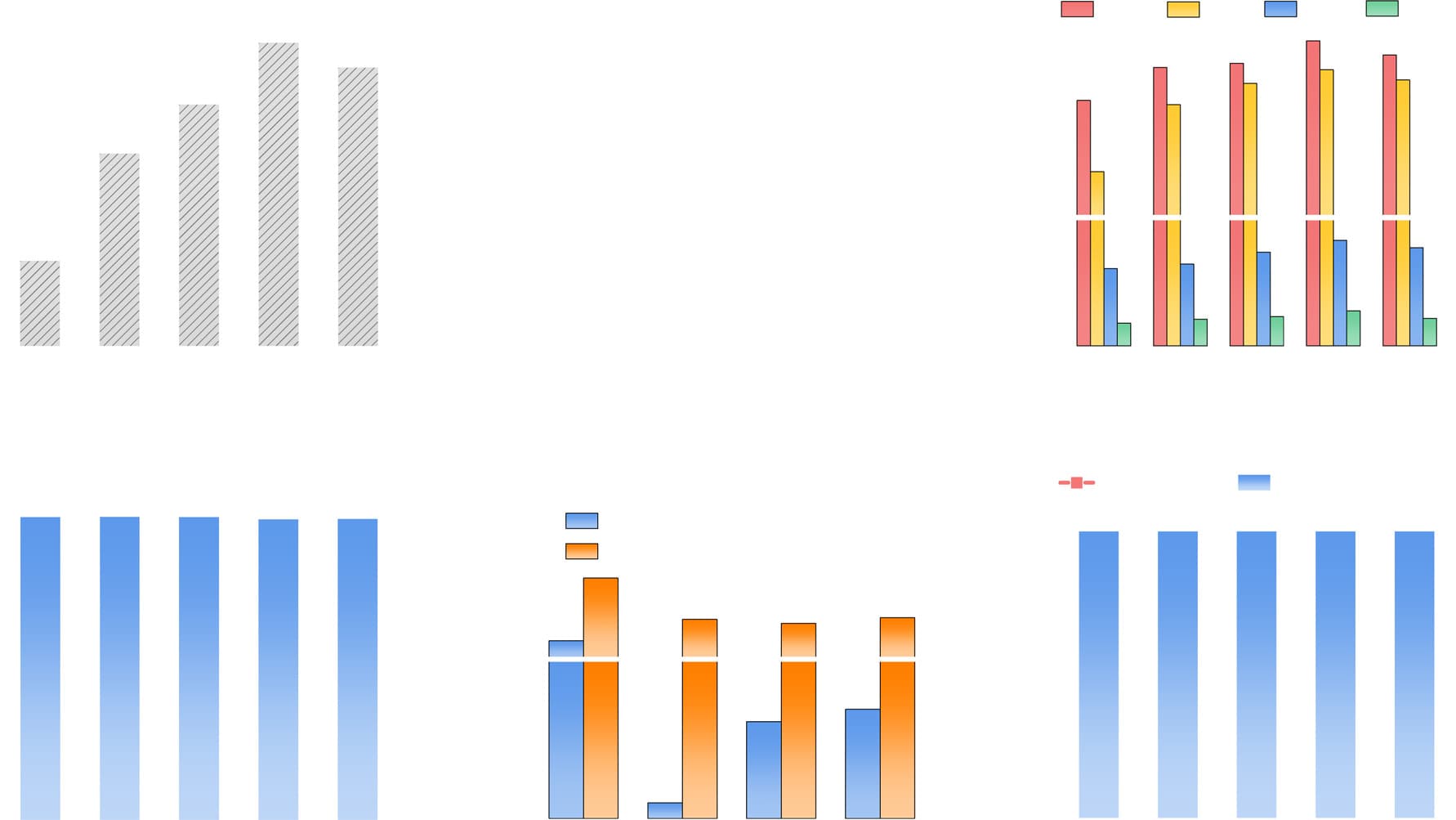
Rys. 2. Porównanie wydajności membrany LA₀.₇₅-TFC z istniejącymi membranami nanofiltracyjnymi. Wykres pokazuje przepuszczalność wody oraz selektywność NaCl/Na₂SO₄ — membrana z dodatkiem ligniny przekracza górną granicę (upper bound) wszystkich dotychczasowych membran poliamidowych. Źródło: Zhang W. et al., Nature Communications (2025), DOI: 10.1038/s41467-024-55595-y.
They're already doing it. Just not in Europe.
The nanofiltration membrane market was worth $1.2 billion in 2024 and is growing 10% annually, driven by regulations on industrial wastewater treatment and brackish water desalination. It is expected to reach 2.1 billion by 2030 - a growth rate comparable to the lithium-ion battery market a decade ago.
Three companies dominate: DuPont Water Solutions (USA, formerly Dow FilmTec), Toray Industries (Japan) and SUEZ (France), controlling a total of over 60% of the market. All three have been using the same interfacial polymerization process since the 1980s. Their flagship products - NF270 Dowa, UTC-60 Toraya - achieve permeability of 10-13 L m⁻² h⁻¹ bar⁻¹. Zhang's membrane makes 26. The difference is that the Chinese team didn't have to build a new factory — they just added lignin to an existing recipe.
Chinese laboratories - Sun Yat-sen University, but also Harbin Institute of Technology, Nanjing Tech University and Dalian Institute of Chemical Physics - are publishing more and more works on the modification of membranes with organic additives. This is not a coincidence. China is the largest paper producer in the world (128 million tons per year) and has the greatest problem with the management of black liquor. A membrane that uses this waste as a raw material solves two problems at once: it provides better water filtration and reduces the amount of lye burned - and therefore CO₂ emissions from the paper mill. One medium-sized Chinese paper mill (300,000 tons of paper per year) emits approximately 250,000 tons of CO₂ per year from burning black liquor. Even partial redirection of lignin to membrane production would reduce this footprint.
Zhang and his team - which includes prof. Chuyang Y. Tang of the University of Hong Kong, one of the most cited membrane researchers in the world - are already talking to Chinese membrane manufacturers about implementation. Key advantage: the addition of lignin does not require ANY modification to the existing production line. Same equipment, same response times, same temperature. The only change is adding lignin to the tank with the PIP solution.
The problem is the patent — or rather the lack thereof. Lignin as an additive for interfacial polymerization is so simple that it is difficult to protect it effectively. Any manufacturer can add lignin to their PIP solution without disturbing anything - it's like patenting "putting salt in the soup." Therefore, the Chinese team opted for publication in Nature Communications and quick implementation, instead of a multi-year patent battle. If they succeed - and everything indicates that they will - the first commercial LA-TFC membranes could hit the market as early as 2027.
Wrocław, Gdańsk and lye that no one counts
Poland is the fifth paper producer in the European Union - 5.5 million tons per year, mainly from plants in Świecie (Mondi, 1.3 million tons), Kwidzyn (International Paper, 0.6 million tons) and Ostrołęka (Stora Enso, 0.4 million tons). Each tonne of kraft paper generates approximately 0.5 tonnes of lignin in black liquor. Total: over 2 million tons per year. Almost all of it is burned in sodium boilers - this is not so much a disposal as a recovery of energy and chemicals. But the value of lignin as a chemical feedstock — not just a fuel — is growing.
Meanwhile, Polish membrane laboratories are already working on modifying the IP process. Prof. team Joanna Kujawy from the Gdańsk University of Technology is researching nanofiltration membranes for the recovery of metals from industrial leachates - the addition of lignin would ideally fit this research profile. At the Wrocław University of Science and Technology, the group of prof. The Bryjaka brand has been working on polyamide membranes modified with natural polymers for years - lignin is a natural candidate. The Institute of Physical Chemistry of the Polish Academy of Sciences in Warsaw has infrastructure for membrane characterization (XPS, AFM, SEM), which would allow verification of Chinese results on Polish raw materials.
Then there is the industry. Mondi Świecie - the largest paper mill in continental Europe - is already experimenting with the separation of lignin from black liquor for the production of bioplastics and phenolic resins. Adding membranes to the lignin product portfolio would be a natural extension. Similarly, International Paper in Kwidzyn - the company has its own research laboratories and is actively looking for uses for lignin beyond combustion.
The problem, as usual, is financing. The Polish nanofiltration membrane with the addition of lignin does not require breakthrough discoveries - it requires process engineering: optimization of the lignin concentration for a specific black liquor from a given paper mill (each has a different composition), long-term tests in real industrial conditions (pressure, temperature, fouling), scaling from the laboratory format to an 8-inch spiral module - the industry standard. This is a cost of around PLN 2-3 million - a typical budget of the LIDER project at NCBR or a consortium under the SMART path at PARP.
Rate? If Chinese LA-TFC membranes enter the market in 2027 - and everything indicates this - they will offer twice the permeability at a lower production cost (lignin is a waste, not a raw material). European manufacturers who do not implement this will be left behind. Poland has lignin, it has laboratories, it has industrial partners. The only thing left is a decision: whether the lignin continues to go up in smoke or starts filtering water.
Sources
- Zhang W., Zhao S., Li H. et al., Lignin alkali regulated interfacial polymerization towards ultra-selective and highly permeable nanofiltration membrane,Nature Communications(2025), DOI: 10.1038/s41467-024-55595-y
- Liang Y., Zhu Y., Liu C. et al., Polyamide nanofiltration membrane with highly uniform sub-nanometer pores for sub-1 Å precision separation,Nature Communications(2020), DOI: 10.1038/s41467-020-15771-2
- Yang Z., Guo H., Tang C.Y., The upper bound of thin-film composite (TFC) polyamide membranes for desalination,Journal of Membrane Science(2019), DOI: 10.1016/j.memsci.2019.117297
- Wang Z., Wang Z., Lin S. et al., Nanoparticle-tempered nanofiltration membranes for ultrahigh performance desalination,Nature Communications(2018), DOI: 10.1038/s41467-018-04467-3
- Tan Z., Chen S., Peng X. et al., Polyamide membranes with nanoscale Turing structures for water purification,Science(2018), DOI: 10.1126/science.aar6308
Comments· 0
No comments yet. Be the first.