
One square centimeter versus a supercomputer. Poles in the team that proved quantum superiority
The year is 2019. In the D-Wave Systems laboratory near Vancouver, engineers are staring at raw data from the latest Advantage quantum processor. It has 5,640 qubits - a record that the company boasts in a press release. But Andy King, an experimental physicist, sees more than just a marketing number. He sees a pattern. A curve that behaves as predicted by the Schrödinger equation - the fundamental law of quantum mechanics, written down a hundred years ago by an Austrian with distinctive glasses. Six years later, in July 2025, the results of these observations are publishedScience. The message is clear: D-Wave's quantum processor has performed calculations that the best supercomputers and tensor algorithms could not repeat in a reasonable time. For the first time in history, a quantum machine - the same one you can buy for a few million dollars - has pushed the boundaries of what is classically achievable. Not in an artificially crafted test. In a real physical problem. In the simulation of quantum matter, which has been the Holy Grail of computational physics for decades.
One square centimeter versus a supercomputer
The heart of the experiment is not an abstract algorithm on a whiteboard. It is a physical superconducting system, cooled to 15 millikelvins - colder than interstellar space. On an area of just a few square centimeters there are hundreds of niobium loops, each of which can be in a superposition of two quantum states. Together they create a programmable system that, under the control of an external magnetic field, evolves in accordance with the Ising Hamiltonian - a model describing the interactions between spins in a spin glass.
The problem that King and his 62 co-authors set for the processor was a classic computational nightmare: simulating quantum quench in three-dimensional spin glass. To put it simply: imagine a network of one million magnets, each of which interacts with its neighbors in a partially random way. When we suddenly change the magnetic field, the system evolves, producing quantum entanglement between the spins. For a classical computer, tracking this evolution means exponentially increasing complexity - each additional spin doubles the state space.
Meanwhile, D-Wave's quantum processor doesn't have to simulate this evolution - it does itimplements. Physically. At the same time that a matrix product state (MPS) supercomputer would take months for an approximate solution, the quantum annealer returns samples consistent with the Schrödinger equation in microseconds.
The team's key discovery was the confirmation that entanglement in the simulated system follows area-law scaling. This means that the amount of entanglement does not increase with the volume of the system, but with its surface area - paradoxicallymakes it easiertask for a quantum processor and at the same time explains why classical methods still worked so well for smaller systems. The problem is that for large-scale systems - those that are of practical importance - even tensor methods and neural networks start to fall behind. The Advantage2 processor used in the experiment beat them all.
How fundamental this discovery is is demonstrated by the way the team verified it. They compared Annealer's results with as many as five different classical approaches: MPS tensor networks, the time-dependent variational principle (TDVP) method, neural networks (neural quantum states), Monte Carlo simulations and the belief propagation algorithm. None of them achieved the accuracy of a quantum processor in a reasonable time. Keyword:reasonable. Classical methods could theoretically achieve the same precision, but the time needed for calculations grew so quickly with the size of the system - precisely according to stretched-exponential scaling - that no supercomputer could cope with the largest tested systems.
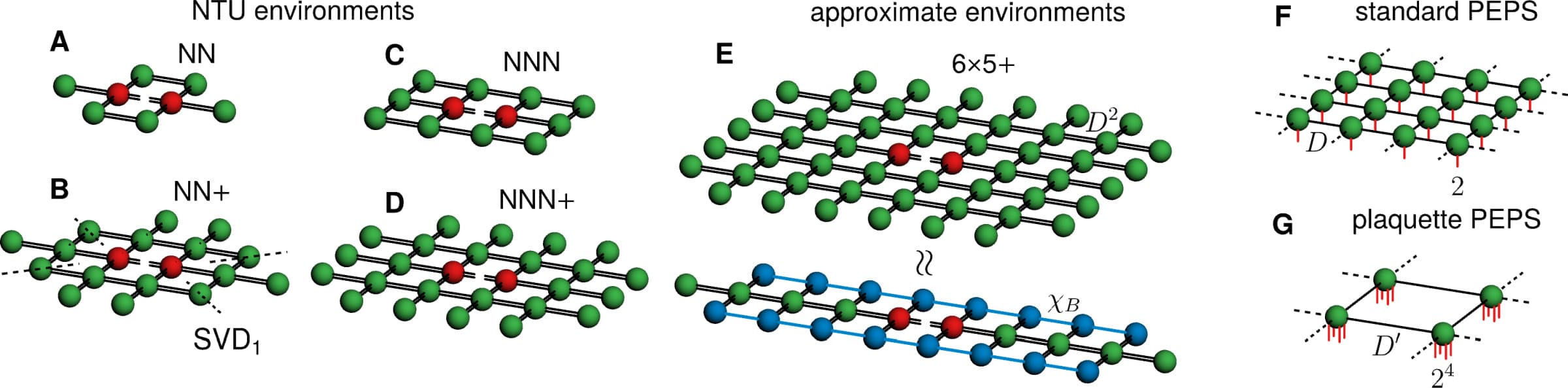
Rys. 1. Porównanie czasu obliczeń: procesor kwantowy D-Wave Advantage2 kontra najlepsze metody klasyczne (MPS, TDVP, sieci neuronowe). Oś pionowa w skali logarytmicznej. Źródło: King A. et al., Beyond-classical computation in quantum simulation, Science (2025), DOI: 10.1126/science.ado6285.
This is not theoretical proof of quantum superiority like the Google experiment from 2019 (which, a few months later, Chinese scientists showed could be reproduced classically). It's a hands-on demonstration on a real physics problem - simulating quantum matter - that interests scientists regardless of whether they believe in quantum computers.
There is a certain irony in this. D-Wave has been criticized by academia for years because its Annealers are not "real" quantum computers — unlike Google's or IBM's gateway machines. Meanwhile, it was the D-Wave annealer that was the first to provide practical proof that a physical superconducting system can perform calculations beyond the classical range. Not through universal error correction, which no one has yet mastered on a production scale. By directly using physics.
A race that changes computing architecture
The work was published at a time when the quantum computing market is moving from the laboratory phase to early commercialization. D-Wave, listed on the NYSE since 2022, sells its processors to customers such as Lockheed Martin, Google (before building its own chip), Los Alamos National Laboratory and Volkswagen. The price of a single machine is approximately $15 million. The quantum computing market — which includes D-Wave Annealers, IBM gateway computers, Google, IonQ, Rigetti and Quantinuum — is expected to reach $850 billion by 2040, according to McKinsey.
But the heart of King and team's work isn't in the commercial success of any one company. It lies in the architectural shift that this work documents. For decades, computational advances have meant faster transistors. Now it means a fundamentally different way of counting — one in which nature does the math for us.
Quantum annealing, a D-Wave technology, works differently than IBM or Google gateway computers. Instead of executing a sequence of logic gates on qubits, annealer encodes the problem in the energy landscape of a physical system and allows it to naturally settle into the lowest energy state that represents the solution. This approach has limitations - not every problem can be coded this way - but for optimization problems and quantum matter simulations, it is surprisingly effective.
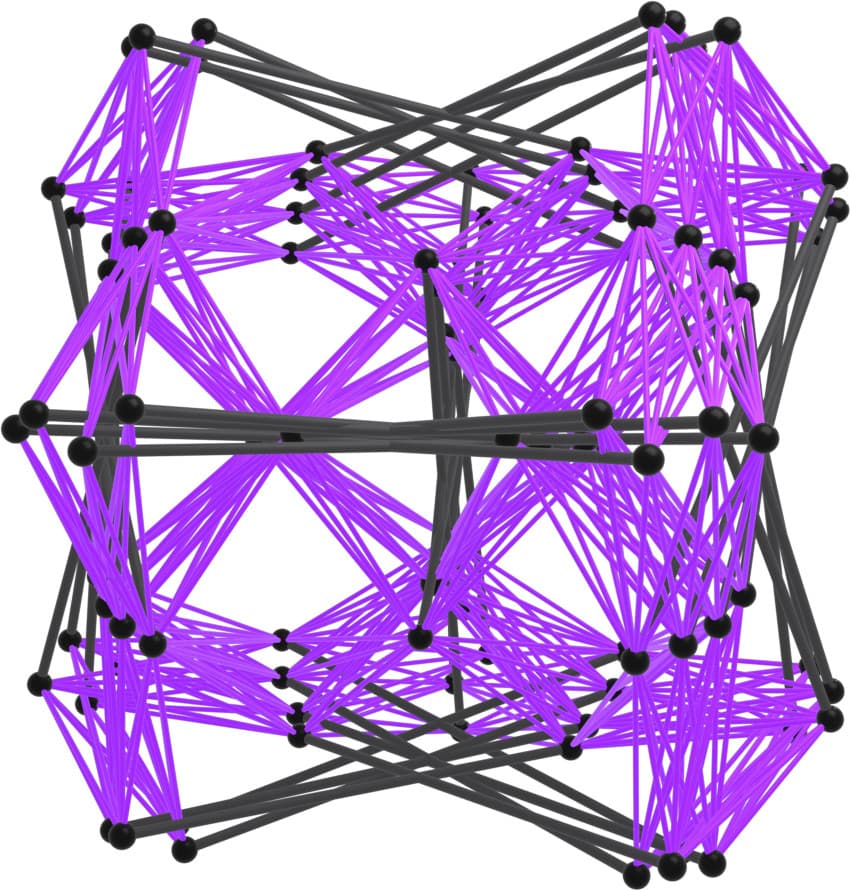
Rys. 2. Fizyczna realizacja eksperymentu — widok układu nadprzewodzącego D-Wave Advantage2. 5640 kubitów w temperaturze 15 mK, kontrolowanych zewnętrznym polem magnetycznym. Źródło: King A. et al., Science (2025), DOI: 10.1126/science.ado6285.
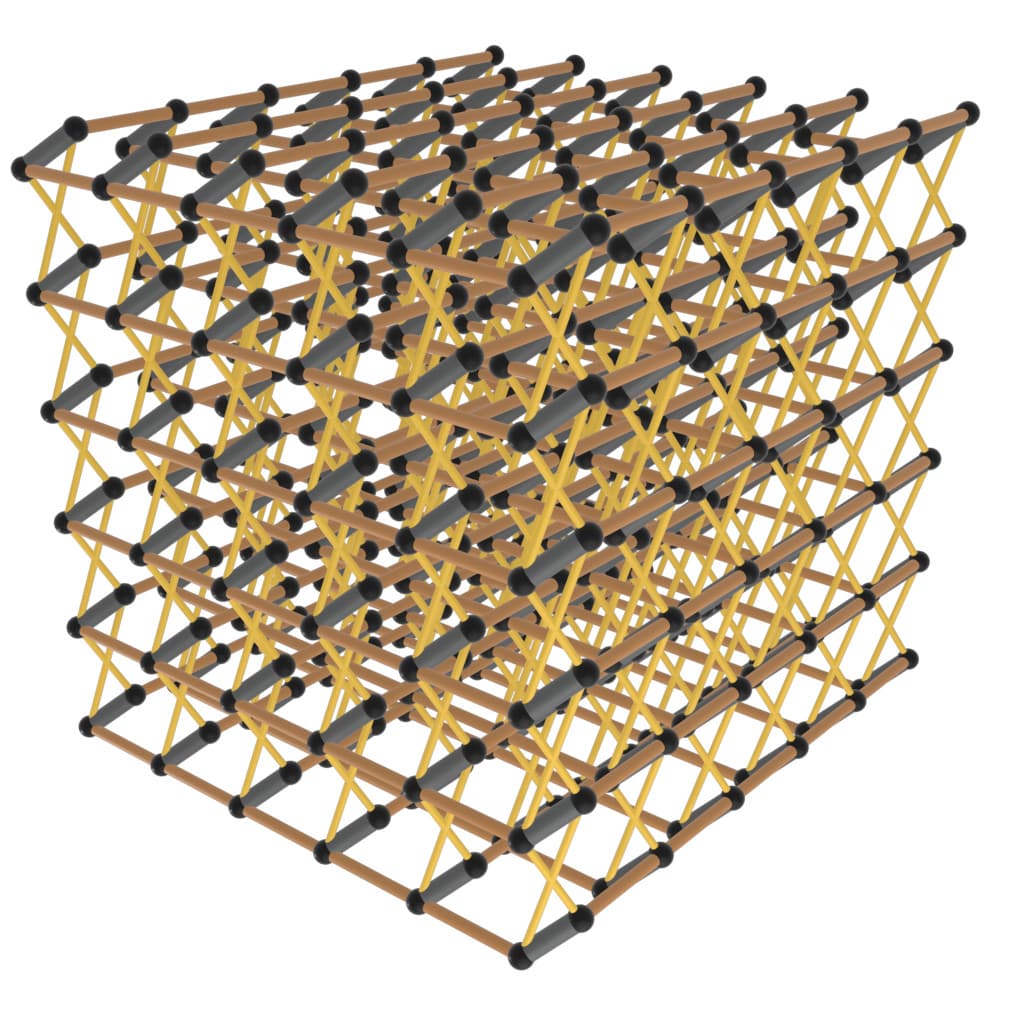
Rys. 3. Ewolucja splątania kwantowego w symulowanym szkle spinowym. Ilość splątania podlega prawu powierzchniowemu (area-law) — rośnie z powierzchnią, nie objętością układu — co tłumaczy skuteczność procesora kwantowego. Źródło: King A. et al., Science (2025), DOI: 10.1126/science.ado6285.
The co-authors of the paper emphasize that their results do not mean the end of classical calculations. Tensor methods, neural networks, and Monte Carlo simulations will remain essential for years to come - especially for verifying quantum results. But for the first time we have hard evidence that for a specific, non-trivial class of physics problems, quantum architecture achieves results beyond the reach of time-equivalent classical methods. Stretched-exponential scaling - a mathematical term describing how the computational effort of classical algorithms increases with the size of the problem - has been empirically confirmed.
The experiment also has practical significance beyond theoretical physics. Spin glasses are not just an academic model - they are the mathematical framework for optimization problems that appear everywhere: from logistics routing, to drug design (protein folding), to optimizing financial portfolios. If the D-Wave annealer can handle the most difficult variant of this problem - quantum dynamics simulation - then there is a viable path to commercial applications within the next 3-5 years, not decades as previously predicted. Volkswagen is already using D-Wave annealers to optimize taxi routes in Beijing and Barcelona. The difference between those implementations and the current work is that for the first time we have scientific proof that the machine does something that cannot be replaced by a regular server.
Krakow in the quantum puzzle
Among the sixty-three names on the list of authors, two are Poles: Marek M. Rams and Jacek Dziarmaga from the Jagiellonian University. Their presence on the pagesSciencein this particular job is not a coincidence - it is the result of twenty years of building competences in a field that was considered niche for a long time.
Dziarmaga's team at the Jagiellonian University has been specializing in numerical simulations of quantum systems for years, with particular emphasis on phase transitions and non-equilibrium dynamics - exactly the phenomena that the D-Wave processor was designed to model. Rams, whose work on matrix product states (MPS) has been cited hundreds of times, was one of the authors responsible for comparing the results of the quantum annealer with the best available classical methods. That's the part of the job - the rigorous validation that the processorReallydoes something beyond the reach of supercomputers — was crucial to getting the paper accepted byScience.
The Polish quantum scene does not end at the Jagiellonian University. Center for Optical Quantum Technologies at the University of Warsaw, headed by prof. Konrad Banaszek, works on photon sources of single photons for quantum communication. Wrocław team of prof. Artur Ekert - one of the pioneers of quantum cryptography - is developing the theoretical foundations of quantum security, and the Poznań group of prof. Adam Miranowicz is published inPhysicsReportsworks on ultrastrong coupling in quantum systems.
What's more, Poland has already had its first implementations. In 2023, the Poznań Supercomputing and Networking Center was the first center in Central and Eastern Europe to launch access to a quantum computer - specifically the IBM Quantum System One in Ehningen, Germany, available remotely via the cloud. The QPoland project, a consortium combining the Jagiellonian University, the University of Warsaw, the Adam Mickiewicz University, the AGH University of Science and Technology and the Polish Academy of Sciences institutes, received funding from the TEAM-NET program of the Foundation for Polish Science (PLN 17.5 million for 2022–2026) for research on quantum information technologies.
In the context of the global technological race, it is worth noting that Poland does not buy ready-made solutions - it builds its own research layer. Rams and Dziarmaga are not accidental co-authors in someone else's project. They are partners who were invited to D-Wave's flagship publication because their expertise in tensor simulations was essential for a reliable quantum-classical comparison. This is a model of cooperation that the Polish scientific community should scale: from expertise to co-authorship, from co-authorship to own projects.
What's missing? First of all, direct access to the equipment. Poland does not have its own quantum computer - we use IBM remotely in Germany. For basic research this is enough. But if we want the next breakthrough - say, the first Polish quantum start-up - to have a Polish address, we need our own infrastructure. Cost? A single D-Wave annealer is ~$15 million. For comparison: one SuperFAST - a new petascale supercomputer currently being installed in Krakow - costs over PLN 200 million. The purchase of a quantum machine by a consortium of Polish universities within the budget of one large infrastructure grant is not a fantasy - it is a political decision.
Another issue is human capital. Dziarmaga and Rams are among the world's best, but they are the 50+ generation. The real question is: will their PhD students be starting companies in Krakow or Vancouver in 5 years?
Deadline? The quantum race has no cut-off date, but it does have points of no return. The first of them - a demonstration of practical quantum advantage - has just been completed, with Polish participation. The next — the first commercially useful problem solved solely on a quantum computer — is estimated by D-Wave experts at 2027–2028. If Polish quantum physicists want to be at this table, and not just observe it, decisions about the next round of financing - FNP, NCN OPUS programs, industrial partnerships - must be made within the next 12 months.
Sources
King, A. et al. (2025). "Beyond-classical computation in quantum simulation."Science, eado6285. DOI:10.1126/science.ado6285
D-Wave Systems Inc. (2024).Advantage2™ Quantum Processing Unit: Technical Overview. Burnaby, BC.
McKinsey & Company (2024).Quantum Computing: An Emerging Ecosystem and Industry Use Cases.
QPoland Consortium (2022).Quantum information technologies - from basics to applications. TEAM-NET FNP project.
Arute, F. et al. (2019). "Quantum supremacy using a programmable superconducting processor."Nature, 574, 505–510.
Holewa, P. et al. (2024). "High-throughput quantum photonic devices emitting indistinguishable photons in the telecom C-band."Nature Communications, 15, 66.
Miranowicz, A. et al. (2024). "Quantum amplification and simulation of strong and ultrastrong coupling of light and matter."PhysicsReports, 1025, 1–93.
Comments· 0
No comments yet. Be the first.