
A cable that can be injected. Algae electronics will replace surgical implants
A hospital that wasn't needed
In January 2024, Hossein Montazerian sat in a heart surgeon's office at UCLA Medical Center, looking at a photo of a pacemaker, a box the size of a matchbox that the surgeon had to implant under the patient's skin. The operation lasted three hours. The scar will remain forever. Risk of infection: 2-4%. Cost: $60,000.
Montazerian wasn't there as a patient. He was a materials engineer at the Terasaki Institute who had been trying for five years to solve a seemingly insoluble problem.
How can we build electronics that can be injected through a needle - without surgery, without scarring, without rejection by the body?
He wasn't the first to ask this question. For a decade, dozens of labs tried to do the same.
Everyone was hitting the same wall.
A semiconductor that refused to dissolve
The problem started with the material. The gold standard in bioelectronics was PEDOT:PSS, a conductive polymer based on a polystyrene skeleton. It conducts electricity, is biocompatible, and can be formed into flexible structures. An ideal candidate for implantable electronics.
Except for one detail - and a fatal one at that.
PEDOT:PSS does not dissolve in water. The hydrophobic polystyrene skeleton causes the polymer particles to clump into microscopic lumps when in contact with any aqueous solution. And the human body is 60% water.
An attempt to inject the PEDOT:PSS suspension into the tissue ends identically every time. The polymer forms aggregates. The body recognizes it as a foreign body. Over the course of a week, a fibrous sheath grows around the injection site - a natural barrier that isolates the intruder. End of leadership. End of functionality.
In December 2023, Montazerian conducted an experiment that almost ended the project. He injected his 40th formulation of PEDOT:PSS into a lab mouse — this time with the addition of a surfactant that would theoretically prevent aggregation. After 48 hours, the cells at the injection site were dead. Apoptosis on a scale he hadn't anticipated. The surfactant that was supposed to help turned out to be cytotoxic.
“I was sitting at the microscope at three in the morning, looking at dead cells,” he later told his lab colleagues. "Forty attempts. Forty failures. I began to wonder if this problem even had a solution."
He didn't. In a traditional approach.
The answer is on a plate - literally
Alginate is a natural polymer obtained from brown seaweed. We use it every day - as a thickener in ice cream, a component of hydrogel dressings, and a carrier of medicines in pharmacy. The body recognizes it as harmless. It does not cause inflammation. Does not create a fibrous sheath. It is naturally biodegradable - it breaks down into harmless simple sugars.
There's only one problem. Alginate does not conduct electricity.
Montazerian came up with the idea not in the lab, but over dinner with the team of Paul Weiss from UCLA, a physicist who has been working on interfaces between materials and biology for years. The conversation turned to PSS, the polystyrene sulfonate that serves as an admixture in PEDOT:PSS and is responsible for conductivity.
"What if we use something hydrophilic instead of hydrophobic PSS? Something the body already knows?"
The answer was sulfonation - the attachment of sulfate groups (-SO₃) to the alginate backbone. Chemically simple reaction: alginate + chlorosulfonic acid → sulfonated alginate (AlgS). The same sulfate groups that are responsible for conductivity in PSS can be grafted onto a natural, hydrophilic scaffold.
Effect? A material that simultaneously conducts electricity and dissolves in water. PEDOT:AlgS.
20 times more. 5 times further. 250% more sensitive
The numbers are merciless in their expression. Compared to PEDOT:PSS, the new material achieves five times higher dispersion in aqueous solutions - up to 20% by weight, while PEDOT:PSS does not exceed 4% without immediate aggregation.
This directly translates into electrical conductivity. Hydrogels made from PEDOT:AlgS conduct electricity 20 times better than those made from PEDOT:PSS - because more conductive material can be packed into the same volume without losing stability.
Montazerian's team — working with Robert Langer of MIT (over 1,500 patents, co-founder of Moderna), Weiem Gao of Caltech and Ali Khademhosseini of the Terasaki Institute — tested the material in three clinical scenarios.
ECG electrodes 3D printed with alginate-PEDOT:AlgS ink produced a signal that was 30% clearer than PEDOT:PSS. Electromyography (EMG) - a measurement of muscle activity - showed signal amplitude 43% higher. Smart hydrogel dressings monitoring wound pH? Vigilance increased by 250%.
And this is just the beginning. Montazerian showed that the ink could be stored at room temperature for weeks - PEDOT:AlgS remained stable in solution, while PEDOT:PSS sedimented within hours. This is not a laboratory curiosity. This is the difference between research material and a product that can be packed in a syringe and sent to a hospital.
But the most important result was biological, not electrical.
When injected under the skin of mice, PEDOT:PSS formed a fibrous sheath within a week - the body isolated the invader, as it always does. PEDOT:AlgS behaved completely differently. Over the course of 11 weeks, the material gradually underwent hydrolytic degradation - the ether bonds in the alginate skeleton broke on contact with water, and the polymer disintegrated into harmless fragments. There was no scar at the injection site. There was no inflammation. The body simply absorbed the electronics.
This is not an improvement of PEDOT:PSS. This is an entirely new category of material: electronics that can be injected and disappear on their own when no longer needed.
Montazerian was not alone in this. Publication inNature Communicationsbears the names of fourteen authors from five institutions.
28 billion and one needle
The global medical bioelectronics market – pacemakers, neurostimulators, cochlear implants, glucose sensors – was worth $28.2 billion in 2024 (Grand View Research). Growth rate: 11.8% per year.
Problem? Each of these devices requires surgery to be implanted. Each surgery carries a 2-4% risk of infection. Each infection adds an additional $20,000 to $50,000 to the health care system — in addition to human suffering. Startups in this space — like Elon Musk's Neuralink and Synchron — have raised hundreds of millions of dollars, but they all rely on the same paradigm: surgery + implant. None solves the fundamental problem of the interface between rigid electronics and soft tissue.
PEDOT:AlgS will not immediately replace pacemakers. But it opens the door to applications that do not exist today because there is no way to deliver them. Smart dressings that monitor wound healing in real time - injected, not glued. Bioelectrodes for temporary monitoring of heart function after a heart attack - biodegradable, cannot be removed. pH sensors for detecting post-operative infections - implanted with one prick, dissolving after a week.
Article inNature Communicationsfrom April 2025, of which Montazerian is the first author, shows that PEDOT:AlgS works with different hydrogel matrices: alginate for 3D printing of electrodes, gelatin for bioadhesive wound sealants. This is not a point solution. It's a platform.
Poland: the material is there. The product is not available
Poland has competences. Alicja Bachmatiuk's team from Łukasiewicz – PORT in Wrocław publishes inInfoMatworks on two-dimensional materials for flexible electronics (DOI: 10.1002/inf2.12555). Scientists from the Gdańsk University of Technology - Justyna Gołąbek and Michał Strankowski - are researching energy nanoconverters for self-powered sensors. Polish teams regularly publish in the field of conductive hydrogels.
There is no bridge between the publication and the product.
PEDOT:AlgS is a technology that can be developed in Poland. The raw materials - alginate, EDOT, ammonium persulfate - are commercially available, without export restrictions. Applications - smart dressings, bioelectrodes, wound sensors - meet the needs of an aging society, where each postoperative infection means an additional week of hospitalization for PLN 15-20,000.
Financing programs exist: FENG offers a "lab to market" path with a budget of up to PLN 12 million per project. Horizon Europe has dedicated competitions for medical bioelectronics ("Health" cluster, budget of EUR 1.2 billion for 2025-2027). NCBR regularly announces competitions at the intersection of materials engineering and medicine.
Except no one applies. Polish bioelectronics is stuck between the laboratory and the hospital - too advanced for a basic grant, too early for a VC, without a bridge institution like the Terasaki Institute that would take on the risk of preclinical validation.
And this is not a coincidence. This is a structural effect. Polish grants are divided into two types: basic research (NCN, OPUS, up to PLN 2 million) and implementation research (NCBR, Szybka Ścieżka, from PLN 5 million). There is a hole between them - the concept validation phase, which costs PLN 500,000 to PLN 2 million and requires an interdisciplinary team with access to animal models. No grant program covers this gap.
Montazerian solved this problem in California, where the Terasaki Institute acts as exactly that missing bridge: a team of materials scientists, biologists and clinicians under one roof, with a budget for animal research and a path to spin-offs. There is no equivalent in Poland.
Deadline that no one has announced
PEDOT:AlgS will not go to the hospital tomorrow. The road from publication inNature CommunicationsFDA certification takes a minimum of 5-7 years and a budget of USD 50-100 million - first long-term studies of the immune response (which Montazerian's team is already working on), then phase I-III clinical trials.
But the direction is decided. The electronics of the future will not be implanted - they will be injected. The polymer will no longer be a foreign body - it will become a liquid that the body accepts as its own tissue. Just as seaweed alginate has gone from ice cream thickener to stem cell scaffold, PEDOT:AlgS will go from publication to product.
The needle will replace the scalpel. The cable will become a drop.
For Poland, it is not a question of "if". It's a "who will be first" question - who will be the first to build an interdisciplinary team, obtain bridge financing and deliver a working prototype of a smart dressing or biodegradable sensor. The reward is not another publication. The reward is a market worth USD 28 billion, where there is still not a single Polish company.
Sources
- Montazerian H., Davoodi E., Wang C. et al.,Boosting hydrogel conductivity via water-dispersible conducting polymers for injectable bioelectronics, Nature Communications 16, 3755 (2025), DOI:10.1038/s41467-025-59045-1
- Bachmatiuk A., Rümmeli M.H. et al.,Boosting flexible electronics with integration of two-dimensional materials, InfoMat (2024), DOI: 10.1002/inf2.12555.
- Gołąbek J., Strankowski M. et al.,A Review of Recent Advances in Human-Motion Energy Harvesting Nanogenerators, Sensors 24(4), 1069 (2024), DOI: 10.3390/s24041069.
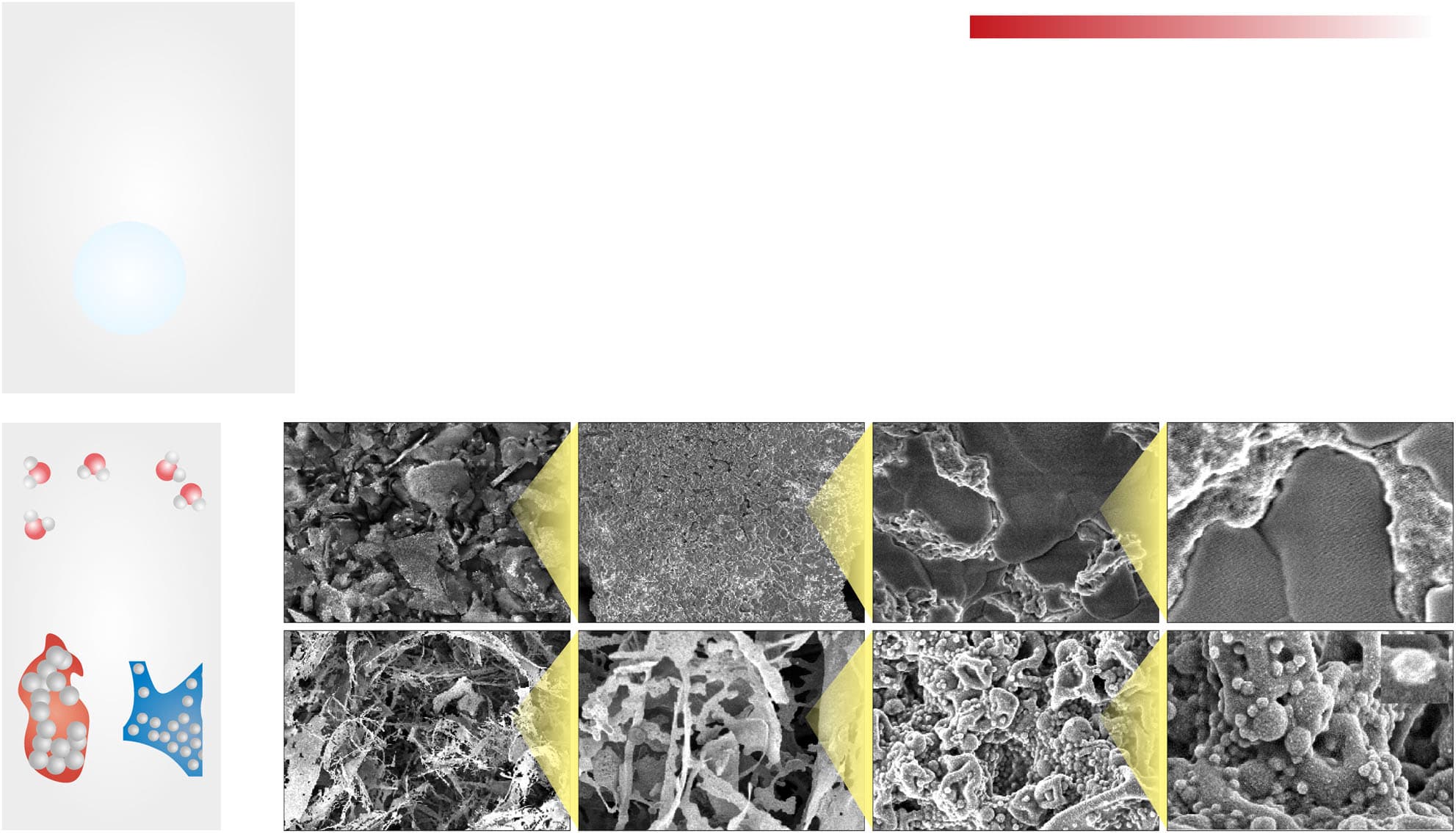
Rys. 1. Schemat syntezy PEDOT:AlgS — zastąpienie hydrofobowego szkieletu PSS hydrofilowym alginianem sulfonowanym umożliwia pięciokrotnie wyższą dyspersję w roztworach wodnych. Źródło: Montazerian H. et al., Boosting hydrogel conductivity via water-dispersible conducting polymers for injectable bioelectronics, Nature Communications (2025), DOI: 10.1038/s41467-025-59045-1.
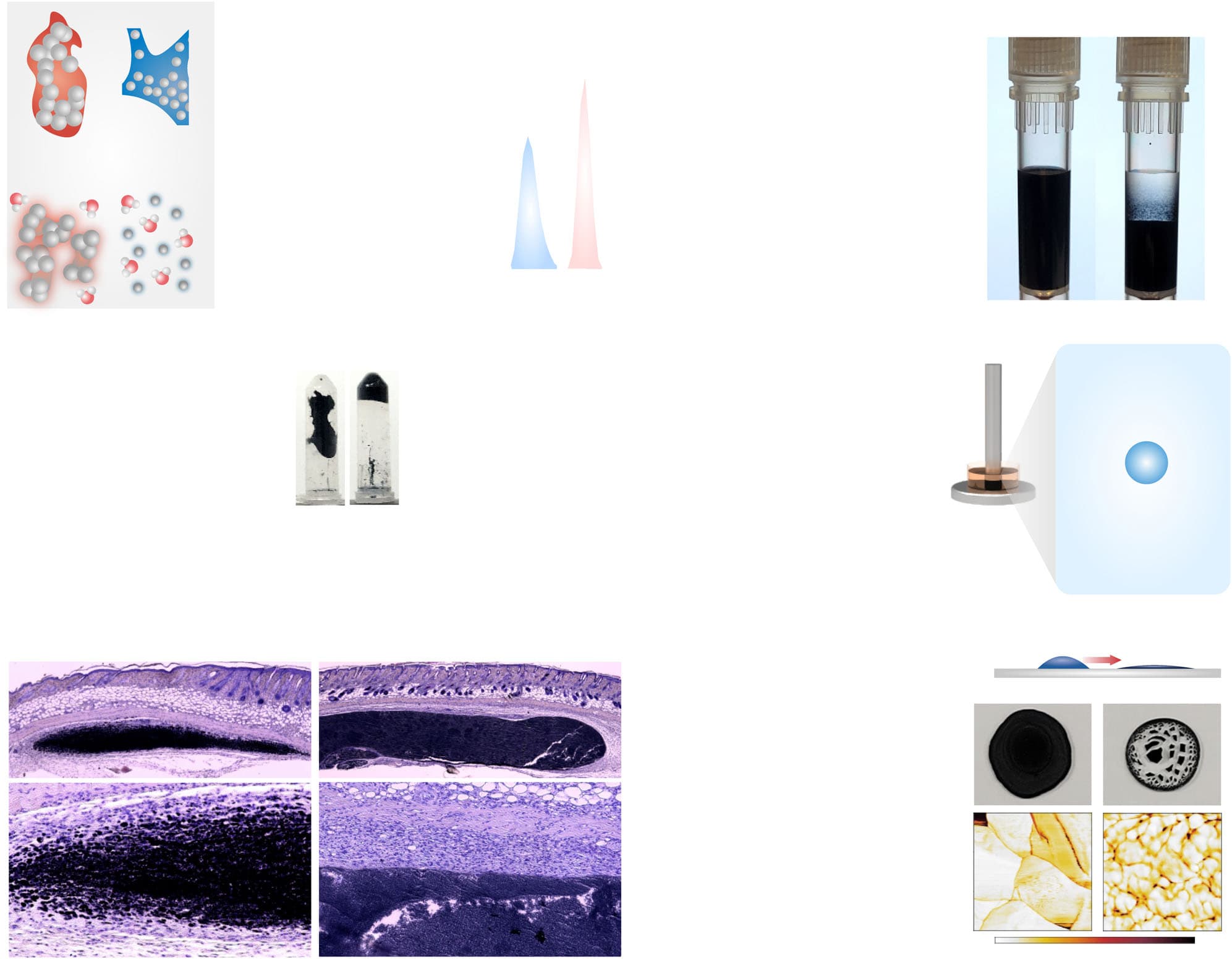
Rys. 2. Charakterystyka hydrożeli przewodzących — porównanie PEDOT:PSS i PEDOT:AlgS w matrycach alginianowych i żelatynowych. Źródło: Montazerian H. et al., Nature Communications (2025), DOI: 10.1038/s41467-025-59045-1.
Comments· 0
No comments yet. Be the first.