58 percent less. Why no one believed in battery recycling for 20 years
Exactly 99 percent
In the United States, 99 percent of lead-acid batteries are recycled. It's the most recycled consumer product on the planet - more than aluminum, more than paper. Meanwhile, lithium-ion batteries, worth two to 10 times more, are recycled only 2 to 47 percent of the time.
Why? For the last two decades, the answer from academia and industry has been the same: too expensive, too technologically difficult, too ecologically insufficient. Recycling lithium-ion batteries was like a miracle diet - everyone said it was necessary, but no one could prove it actually worked. That the sum of the emissions, water and energy needed to recover lithium, nickel and cobalt from a used cell is lower than the sum of the same resources needed to dig them out of the ground.
A team from Stanford University just proved this. And it turns out that for 20 years we have been wrong on each of three key points. Mining – not recycling – is the real environmental problem of the battery supply chain. And Poland, as the largest battery producer in Europe, has a special role to play in this equation.
"It's impossible" — and two decades of three walls
Wall #1: Pyrometallurgy melts everything, including sense.
To recover lithium, nickel and cobalt from a used battery, it must first be melted down. The classic pyrometallurgical process requires temperatures above 1,400°C - higher than the temperature of lava flowing from a volcano. In addition, there is the burning of graphite from the anode, which goes up in smoke along with some of the lithium. In 2019, a review of recycling technologies was published inNatureby Harper and colleagues summed it up brutally: pyrometallurgy recovers cobalt and nickel, but much of the lithium is lost in the slag. The process is energy-intensive, emission-intensive and economically borderline profitable. Recycling one tonne of batteries cost more than the market value of the recovered metals.
The counterbalance – hydrometallurgy – operated at lower temperatures thanks to chemical baths, but required each battery to be discharged in brine before mechanical grinding. Imagine a production line that has to wait 24 hours for each used Tesla to be discharged before it can even start working. In 2020, an analysis by Ciez and Whitacre of Carnegie Mellon University found that even under optimistic assumptions, hydrometallurgy barely breaks even environmentally compared to mining — and was worse in a pessimistic scenario.
Wall #2: mining is just cheaper. And it always will be.
This was an argument that could not be refuted for two decades. Lithium mines in Chile, nickel mines in Indonesia, cobalt mines in the Democratic Republic of the Congo - industrial-scale mining benefits from economies of scale that battery recycling was never intended to achieve. In 2021, global lithium-ion battery production capacity exceeded 500 GWh per year. Recycling - as a fraction of that - had no right to compete on price. The Katanga province of DR Congo alone produces cobalt worth more annually than the entire global battery recycling market.
In addition, there was a forecast from the International Energy Agency: by 2030, electric vehicles will account for 82 percent of global battery production - 2.4 TWh per year. At this rate, mining was expanding faster than recycling could ever keep up. Why bother with old batteries when new raw materials are flowing freely from mines in Atacama and Katanga?
Wall #3: Even if recycling works, its electricity comes from coal.
This was the most insidious of the three barriers, because it attacked the very idea of electrification. All life cycle analyzes (LCAs) to date have assumed that electricity for recycling processes comes from a local mix—in the case of Redwood Materials in Nevada, 70 percent from natural gas. That is, recycling of batteries for electric cars powered by fossil fuel. Perfect irony. Critics rightly asked: what does it matter that we save emissions from mining if we replace them with emissions from gas power plants?
In 2021, it was estimated that switching energy sources could theoretically lower recycling's carbon footprint — but no one had hard data from an actual, industrial recycling line. All models were based on extrapolations from laboratory data. Without access to data from the operating plant, it was impossible to resolve the dispute. Wall number three was intact.
What we didn't know about 18650 cells
Michael Machala and Xi Chen of Stanford University got something no one had before them: full access to operational data from the Redwood Materials facility in Nevada, the largest lithium-ion battery recycler in North America founded by former Tesla CTO JB Straubel. Not computer models, not estimates from the literature, not extrapolations from laboratory experiments. Real data from a production line processing hundreds of tons of used cells - the same 18650 and 21700 formats that sit in your power banks, laptops and electric cars.
What they discovered turns existing knowledge upside down. And in each of the three points that have blocked the development of the industry for years.
First: Reductive Calcination (RC) - Redwood's next-generation pyrometallurgical process - operates at temperatures of 600-1000°C, not 1400°C. It is autothermal: the heat comes from the exothermic reactions of the battery materials themselves, not from external fuel. Does not require burning graphite. Does not lose lithium in the slag. And—crucially—it accounts for only 5.5 to 7.5 percent of the total environmental impact of the process. The rest is hydrometallurgy, which we would do anyway.
Second: when Machali's team compared the production of cathode materials (nickel-cobalt-aluminum oxides, NCA) from recycling with production from fossil raw materials, recycling performed better inall three environmental categories simultaneously: CO₂ emissions, water consumption and energy consumption - each reduced by at least 58 percent. Not "in some cases", not "under optimistic assumptions". In real industrial data, from an operating facility processing mixed streams of used batteries - not carefully sorted, homogeneous laboratory waste.
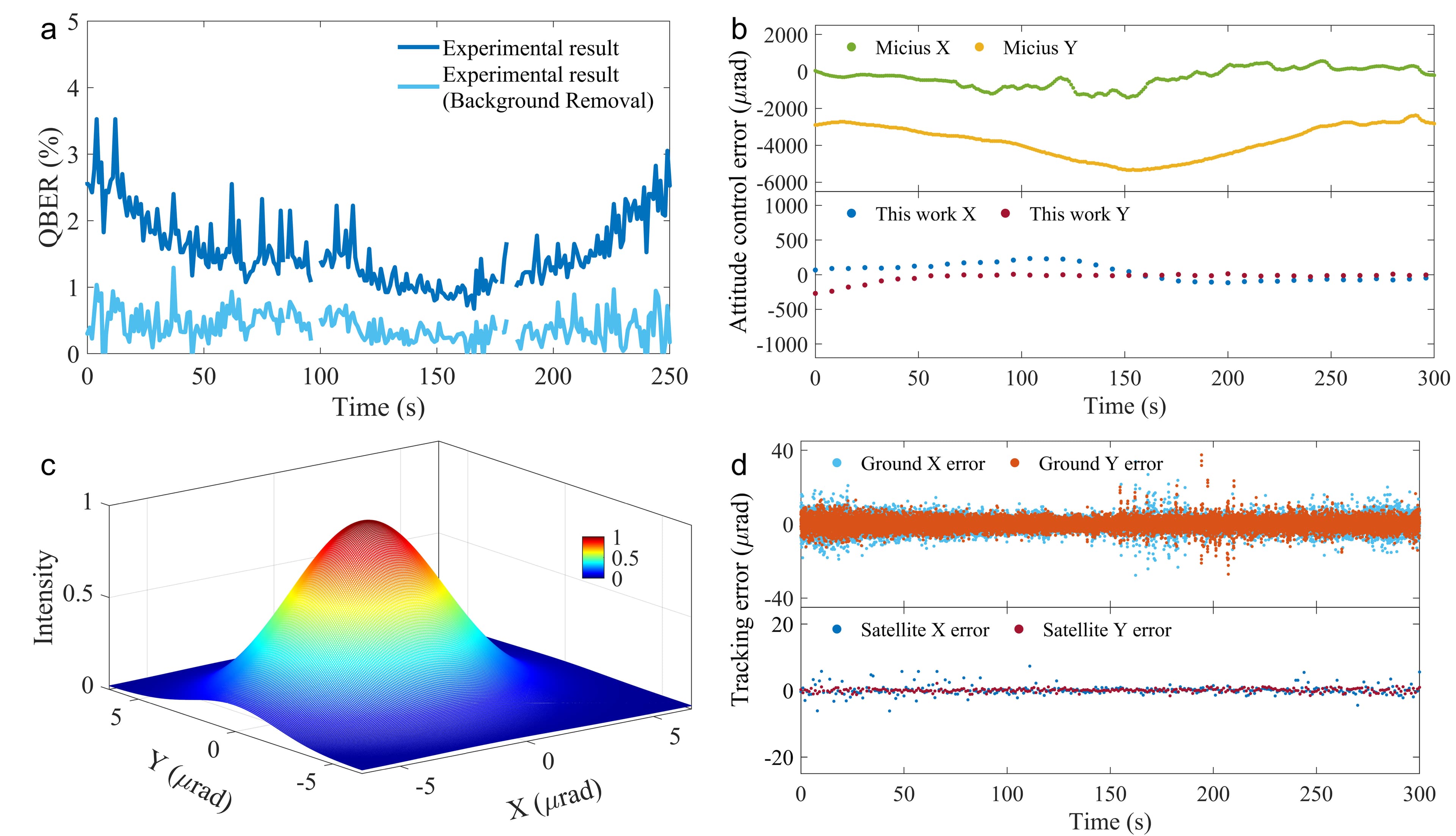
Rys. 1. Porównanie wpływu środowiskowego produkcji baterii z recyklingu i z surowców kopalnianych. Źródło: Machala M.L. et al., Life cycle comparison of industrial-scale lithium-ion battery recycling and mining supply chains, Nature Communications (2025), DOI: 10.1038/s41467-025-56063-x.
Third - and this is a finding that should be on the desks of regulators in Brussels and Warsaw - 70 to 91 percent of all recycling environmental impacts come from a single source: electricity consumption in the hydrometallurgical process. If Redwood Materials used a low-carbon grid (Pacific Northwest hydro, nuclear, renewables), recycling's carbon footprint would fall another 87-93 percent below mining levels. Battery recycling doesn't have a technological problem - it has a problem with where it gets its electricity. Transfer the same technology to a country with a clean energy mix and the environmental advantage becomes overwhelming.
And finally, the fourth thing, perhaps the most counterintuitive to anyone who has ever organized logistics: the steps before refining - transporting used batteries from California to Nevada, collection from service points, sorting - account for less than 4 percent of the total environmental impact in the circular chain. For comparison: in traditional mining, ore transport, extraction and preliminary processing constitute 30 percent. The argument "recycling makes no sense because you have to transport heavy batteries across half the country" has just lost its empirical basis.
They're already doing it. Just not in Europe.
Redwood Materials in Nevada processes 40 GWh of batteries annually - as much as the annual output of two medium-sized gigafactories. China's Brunp (part of CATL, the largest battery manufacturer in the world) reached 100 GWh of processing capacity in 2024. In South Korea, SungEel HiTech will recover lithium, nickel and cobalt from batteries on an industrial scale from 2023.
In Europe - zero. The largest European plant, Northvolt Revolt in Sweden (a daughter company of Northvolt, which filed for bankruptcy this year), was to be launched at full capacity in 2025. Belgium's Umicore announced plans to build a recycling plant in 2022, but the investment was suspended in 2024 due to regulatory uncertainty. Germany's BASF closed its battery recycling project in Schwarzheide the same year. Europe has the most advanced battery regulation in the world and zero operating industrial-scale recycling plants.
Poland has batteries. There is no recycling yet.
Poland is the largest producer of lithium-ion batteries in Europe. The LG Energy Solution gigafactory near Wrocław - the largest of its kind in the European Union - produces cells with a total capacity of over 100 GWh per year, employing over 10,000 people. In addition, there are: the Mercedes-Benz factory in Jawor (batteries for EQV and Sprinter electric vans), the Northvolt Systems plant in Gdańsk (energy storage systems), the Swedish-Polish Impact Clean Power Technology in Pruszków (battery packs for electric buses), and a growing ecosystem of suppliers: from cathodes (Umicore in Nysa) to separators and electrolytes.
But we don't have a single industrial-scale lithium-ion battery recycling facility.
Elemental Holding - a Polish group based in Grodzisk Mazowiecki, listed on the Warsaw Stock Exchange, with revenues exceeding PLN 2 billion per year - is one of the largest recyclers of precious metals from e-waste in Europe (platinum, palladium, rhodium from used car catalytic converters). In 2023, the company announced plans to enter the recycling of lithium-ion batteries by investing in a pilot hydrometallurgical installation in Zawiercie. According to the latest available information, the plant is in the technological start-up phase and has not yet reached an industrial scale.
The topic is alive at universities. The AGH University of Science and Technology in Krakow conducts research on the recovery of critical metals from electronic waste (including batteries) as part of projects financed by NCBR. The Silesian University of Technology - in cooperation with Nano Carbon Poland - is working on new cathode binders to facilitate subsequent recycling. The University of Warsaw publishes analyzes of EU regulations regarding the circular economy for critical raw materials. The Institute of Non-Ferrous Metals in Gliwice (part of the Łukasiewicz Research Network) has a hydrometallurgical laboratory capable of testing lithium and cobalt recovery processes.
There is still no bridge between the laboratory and the production hall.
And there is dramatically little time. The EU Battery Regulation 2023/1542 enters into force in stages, and its calendar is ruthless:
- 2027:battery manufacturers must declare the recycled content of every battery placed on the market.
- 2031:mandatory minimums for recycled content: 16 percent for cobalt, 6 percent for lithium, 6 percent for nickel.
- 2036:the thresholds increase to 26 percent for cobalt, 12 percent for lithium, 15 percent for nickel.
For Polish gigafactories, this means one thing: in the next 5 years they will need local suppliers of recycled materials on an industrial scale. If we don't build these plants in Poland, LG Energy Solution, Mercedes and others will buy recycled materials from the Germans, the Swedes or - more likely - the Chinese, who already control over 70 percent of global battery metal refining capacity.
Cost of entry? A hydrometallurgical installation with a capacity of 10–20 GWh per year costs PLN 200–400 million. The Polish Agency for Enterprise Development, as part of the SMART Path, offers co-financing of up to 60 percent of eligible costs for circular economy projects. The National Center for Research and Development has programs for low-emission technologies (including battery recycling) under European Funds for 2021-2027. Finally, the KPO (National Reconstruction Plan) allocates over PLN 2 billion for the transformation towards a circular economy.
The math is simple: 58 percent fewer emissions. 70-91 percent of the impact depends on the power source. Five years until the EU deadline. It's not a question of "can we afford to recycle?" It's a question of "can we afford not to have it?"
Sources
- Machala M.L., Chen X., Bunke S.P. et al.,Life cycle comparison of industrial-scale lithium-ion battery recycling and mining supply chains, Nature Communications 16, 988 (2025).DOI: 10.1038/s41467-025-56063-x
- Harper G. et al.,Recycling lithium-ion batteries from electric vehicles, Nature 575, 75–86 (2019).DOI: 10.1038/s41586-019-1682-5
- Ciez R.E., Whitacre J.F.,Examining different recycling processes for lithium-ion batteries, Nature Sustainability 2, 148–156 (2019).DOI: 10.1038/s41893-019-0222-5
- Regulation (EU) 2023/1542 of the European Parliament and of the Council of 12 July 2023 concerning batteries and waste batteries.EUR-Lex
Comments· 0
No comments yet. Be the first.